
Free Surface Effect (FSE) & Angle of Loll
Why slack liquid tanks cause virtual loss of stability, and how an initially unstable ship flops into an Angle of Loll.
Key Principles at a Glance 7 points
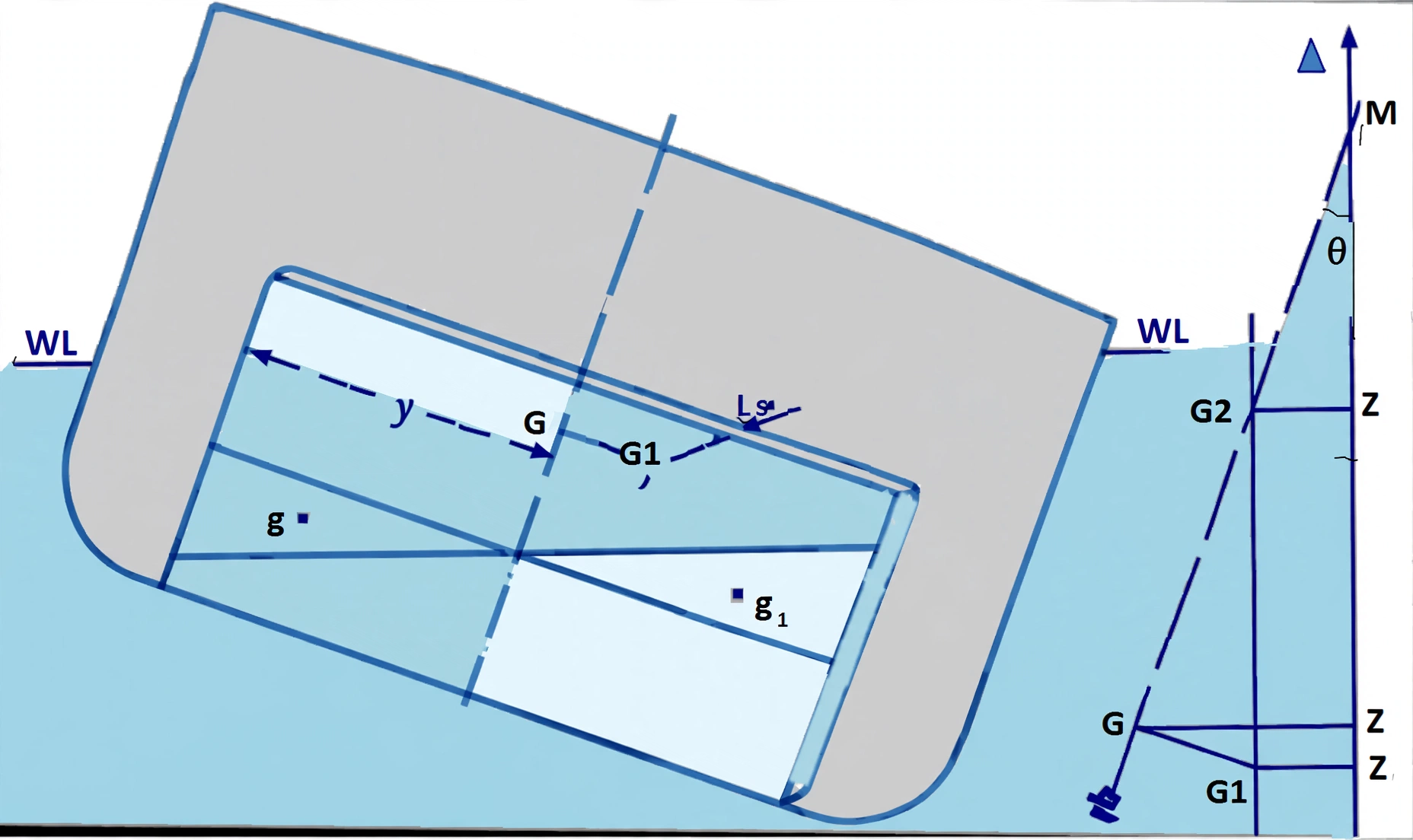
- A "slack tank" (partially filled with liquid) allows fluid to rush to the low side as the ship heels, shifting the liquid center of gravity towards the heel.
- Free Surface Effect causes a virtual reduction in GM, represented as an apparent upward shift of G to G₁.
- Virtual loss of GM is calculated by GG₁ = (i · ρ) / Δ, where i is the second moment of area of the liquid surface (proportional to breadth cubed, b³).
- Subdividing a tank with ONE longitudinal centerline bulkhead slashes free surface effect by 75% (a factor of 4).
- An "Angle of Loll" occurs when initial GM is negative (G is above M): the upright ship cannot balance and flops over to an angle where B moves out far enough to equal G.
- CRITICAL SAFETY RULE: Never ballast the high-side tank on a lolled ship! The added top weight and listing moment will flip the vessel violently to the opposite side and capsize it.
- Correct recovery requires filling the lowest, smallest divided slack tank first, pressing it full, then repeating for adjacent compartments until G is pulled safely below M.
1. What is Free Surface Effect (FSE)?
When a shipboard tank (fuel oil, ballast water, fresh water, or liquid cargo) is completely full (pressed up) or completely dry, the liquid behaves as a solid, static weight. Its center of gravity remains locked in position.
However, when a tank is partially filled, it becomes a slack tank. As the ship rolls or heels:
- The liquid surface remains parallel to the true horizon rather than tilting with the hull.
- A wedge of liquid transfers from the high side to the low side of the tank.
- The center of gravity of the liquid mass shifts in the direction of the heel (from g to g1).
- This shift creates an overturning moment that reduces the ship's natural righting lever (GZ) at every angle of heel.
Naval architects treat this reduction in righting moment as an apparent, virtual upward shift in the ship's Center of Gravity from G to G1:
GG1 = (i × ρ) / Δ
Where i is the second moment of area of the free liquid surface (∝ length × breadth3), ρ is the liquid density, and Δ is the ship's displacement.
The effective metacentric height available to right the ship becomes: GMfluid = GMsolid − GG1.
2. Engineering Methods to Squelch FSE: The Power of Subdivisions
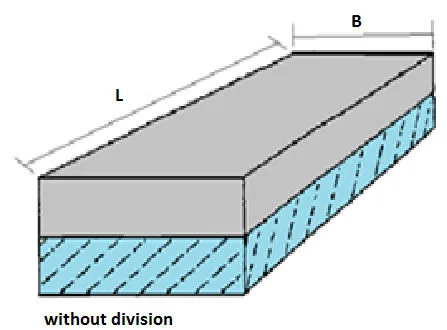
Because the second moment of area i depends on the cube of the tank's breadth (b3), the width of a tank has a massive exponential influence on free surface loss:
Single Wide Tank
A full-width cargo or ballast tank has maximum breadth b. Liquid rushes freely from port to starboard, generating severe free surface loss: GG1 ∝ b3.
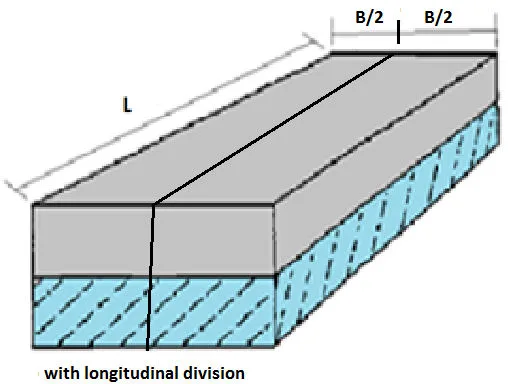
Centerline Longitudinal Bulkhead
Dividing the tank into two equal compartments halves the breadth (b/2). Because (1/2)3 = 1/8, two tanks generate 2 × 1/8 = 1/4 of the original FSE. A 75% reduction!
If a tank is subdivided by n longitudinal divisions forming equal compartments, the free surface effect drops by 1 / n2.
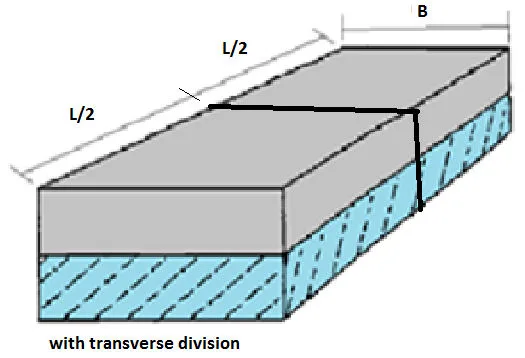
Other Marine Methods to Minimize FSE:
- Swash Bulkheads (Baffle Plates): Perforated internal bulkheads that allow fluid passage for filling and sounding, but violently disrupt fluid velocity and wave sloshing during rolling.
- Tank Pocketing: When a tank is nearly full (90%+) or nearly empty (10%-), the fluid surface touches the top deckhead or bottom plating as the ship heels, artificially truncating the free surface area and improving stability.
- Sluice Valve Discipline: Cross-connecting valves between port and starboard tanks must always remain securely closed during navigation to prevent a single massive free surface.
3. Understanding the "Angle of Loll"
Imagine trying to balance a sharpened pencil vertically on its tip. The moment you let go, it physically cannot stand upright — it immediately flops over to one side. A ship with an Angle of Loll suffers from the exact same condition: it is physically incapable of floating upright in calm water.
Step 1: Why It Cannot Stand Upright (Top-Heavy Condition)
Normally, a healthy ship is bottom-heavy: its Center of Gravity (G) sits comfortably down below the Metacenter (M), giving positive stability (GM > 0). If a wave pushes it, it springs straight back upright.
However, if too much cargo is loaded high on deck, or if water is sloshing inside slack tanks (Free Surface Effect), the ship becomes dangerously top-heavy: G rises above M (negative initial GM < 0). At zero degrees upright, there is zero righting force. The slightest breeze or ripple instantly tips the vessel to one side.
Step 2: Why Doesn't It Capsize Immediately?
You might wonder: if the ship cannot stand upright, why doesn't it flip completely upside down?
Because as the hull tips over, more of the wide, flared ship side gets submerged underwater on the low side. That extra underwater volume pushes upward with powerful buoyant force. This outward shift of buoyancy catches the ship like a cushion and stops it from falling further.
The ship settles and comes to rest leaning steadily at this cocked angle (typically between 10° and 15°). That resting tilt angle is the Angle of Loll.
1. Upright is Unstable
G sits above M (negative GM < 0): Top-heavy cargo or slack tanks destroy righting arm at 0°. The slightest ripple instantly tips the vessel.
2. Resting Tilt (Angle of Loll)
Buoyancy catches the hull: As the ship heels (10°–15°), flared underwater volume pushes upward, balancing G into a state of neutral equilibrium.
3. The Deadly Flop Hazard
Knife-edge balance: Wave momentum pushes past upright and violently flops the ship over to the exact same tilt on the opposite side.
Step 3: The Deadly "Flop" Hazard
Never mistake an Angle of Loll for a calm, stable condition! The ship is balanced on a precarious knife-edge:
- Violent Flop Across: If an ocean swell pushes against the low side toward the upright position, the ship does not stop at zero degrees. Momentum will carry it completely past upright and cause it to violently flop over to the opposite side, slamming into the exact same angle of tilt on the other side! This violent flop shifts loose cargo, injures crew, and can rupture bulkheads.
- The Fatal Ballast Mistake: If an officer mistakes a loll for an ordinary weight list and pumps ballast into the high side, it adds more top-weight, lifts G even higher, and causes the vessel to capsize instantaneously.
The Angle of Loll is the state of neutral equilibrium to which a vessel with a negative initial metacentric height (GM < 0) will heel and lie at rest in calm water. The righting lever GZ is zero in the upright position, negative at small angles of heel, and zero again at the Angle of Loll.
4. Vital Seamanship: Distinguishing a List from a Loll
Confusing a List with an Angle of Loll is one of the most fatal diagnostic errors in maritime history:
| Diagnostic Factor | A Simple List | An Angle of Loll |
|---|---|---|
| Underlying Cause | Transverse shift of weight off-center (positive GM, but G is shifted to one side). | Deficiency of initial stability (G has risen above M; negative initial GM). |
| Ship Behavior in Rolling | Vessel rolls steadily about its list angle, resisting further heel. | Vessel feels "floppy" and sluggish; can suddenly flop across to the opposite side if nudged. |
| Upright Stability | Positive righting arm exists if forced upright. | Zero stability upright; will immediately fall to port or starboard. |
| First Rule of Recovery | Shift weights or deballast from the low side to level the center of gravity. | NEVER deballast low side or ballast high side! First treat as a loll until confirmed. |
5. The Life-Saving Recovery Protocol
When standing on a heeled ship, the natural human reflex is to pump water into the high (elevated) side to counter-balance the tilt. During an Angle of Loll, doing this will capsize the ship!
Adding weight to the high side introduces a slack tank high up, raising G even further. Furthermore, as the vessel begins to right itself, momentum carries it past the upright point. Because GM is negative, it flops violently over to the other side with double the momentum, causing instant capsize.