
Offshore Vessels, Rigs and Dynamic Positioning
Hulls that earn their keep without going anywhere — the exploration, support and construction vessels of the offshore fleet, and the DP system that holds them over a well.
Key Principles at a Glance 8 points
- Offshore vessels are a collective term for the vessels that serve oil exploration and construction work at sea, from drilling and supply to crew transfer.
- A drill ship is a ship-shaped unit with a derrick amidships, and it moves under its own power between wells — the fastest of the drilling units to relocate.
- A jack-up stands on legs driven to the seabed and lifts its hull clear of the water, which removes the wave action that limits every floating unit.
- A semi-submersible gets its stability from submerging its pontoons and presenting only slender columns to the waterplane, which is why it heaves so little.
- Dynamic positioning holds a vessel in position and heading by thrusters under continuous computer control from position-reference and environmental sensors.
- DP exists because anchoring is impossible in deep water and unacceptable over a field of subsea wellheads and pipelines.
- The consequence of losing position is what sets the DP class: a diving support vessel with divers in the water needs a higher redundancy than a supply vessel standing off.
- The four groups — exploration, support, production and construction — are worth reciting because examiners ask for the catalogue, not for one example.
12.1 Offshore vessels as a class
Hulls that are not ordinary ships. Read this after Part 11: the midship sections there are all drawn for cargo carried between ports, while every vessel here earns its keep without going anywhere — holding station over a well, alongside a platform, or over the seabed it is working on.
12.1.1 What an offshore vessel is
Offshore vessels are ships that specifically serve operational purposes such as oil exploration and construction work at the high seas. They help in exploration and drilling of oil, provide necessary supplies to the excavation and construction units at the high seas, and provide the transiting and relieving of crewing personnel to and from the high-seas operational arenas as necessitated.
The denotation is a collective reference: it includes a wide array of vessels employed in the high-seas sector, and the catalogue below is the thing to be able to recite:
| Vessel | Duty |
|---|---|
| Supply ship | Supplies to offshore rigs |
| Pipe layers | Laying pipes and cables |
| Crane barges / floating cranes | A ship with a crane specialised in lifting heavy loads |
| Semi-submersible drill rigs | Mobile offshore drilling units giving stable platforms for drilling oil and gas |
| Drill ships | Merchant vessels designed for exploratory offshore drilling of new oil and gas wells, or scientific drilling |
| Accommodation barges | Stand-alone floating hotels, or accommodation combined with space for cargo |
| Production platforms | Extracting and processing oil and natural gas, or temporarily storing product until it can go ashore for refining and marketing |
| Floating storage unit (FSU) | A floating vessel used principally for storage of oil and by-products |
| Floating production storage and offloading unit (FPSO) | Production and processing of hydrocarbons plus storage of oil |
| Anchor handling vessels | Offshore construction and installation operations |
| Diving vessels | Ocean diving for underwater jobs |
12.1.2 The four groups
They are mainly classified into four groups, each comprising a variety of vessels:
- Oil exploration and drilling vessels
- Offshore support vessels
- Offshore production vessels
- Construction / special purpose vessels
In addition, vessels that give aid in high-seas emergencies and vessels that undertake research and analysis at sea are included under the offshore classification.
12.2 Exploration and drilling
12.2.1 The exploration group
Oil exploration vessels help in exploration and drilling of oil at the high seas. The main types are:
- Drill ship
- Jack-up vessels
- Semi-submersible vessels
- Offshore barges
- Floating platforms
- Tenders
12.2.2 Drill ship
A drillship is a merchant vessel designed for use in exploratory offshore drilling of new oil and gas wells or scientific drilling purposes.
The station-keeping requirement is the strictest stated for any vessel:
For shallow water and deep water drilling operations, it is vital for the vessel to keep station (maintain her position within 1 m) over the oil/gas well, such that the riser connecting the vessel to the well is nearly upright and vertical.
Hence drill ships are fitted with dynamic positioning systems. The lower marine riser angle is continuously monitored and maintained to accurate levels to avoid unwanted disconnections. Present DP rigs and vessels operate in water depths of up to 3,000 m or more, with high-technology DGPS and Long Baseline (LBL) acoustic systems inside the DP module.
Roll-damping tanks of the free-surface type suit vessels that do not depend on forward movement — drill ships are the named example — though introducing a free surface costs stability that must be allowed for in loading.
12.2.3 Jack-up vessel
The material names the jack-up as one of the main exploration vessel types and gives no construction detail for it beyond that listing.
12.2.4 Semi-submersible vessels
Semi-submersible drill rigs are mobile offshore drilling units built to make stable platforms for drilling oil and gas.
The type has a second employment as a heavy-lift ship:
Ships capable of carrying heavy equipment or lifts to the remotest locations often have difficulty loading and offloading. Some of these vessels are mono-hulled or semi-submersible and can immerse themselves to loading draught, thus allowing the cargo to be floated on board.
A drilling rig transported over a large distance is the typical cargo. DP fitted on these vessels holds position during the loading and offloading operations.
12.2.5 Mobile offshore drilling units
DP is, in the current scenario, the only option in deepwater offshore fields. Even in shallower waters DP is increasingly used for positioning drilling rigs before anchoring — particularly with short-duration drilling, where DP saves a great deal of time.
12.3 Support, production and construction
12.3.1 Offshore support vessels
Certain vessels provide the manpower and technical reinforcement that keeps high-seas operations running smoothly and without undesired interruptions — the offshore support vessels. Offshore supply vessels transport structural components to the high-seas sector and assist supply freight; their construction can be purpose-built to suit the operational demands.
The main types:
- Anchor handling tug vessel (AHTV)
- Seismic vessel
- Platform supply vessels (PSVs)
- Well intervention vessel
- Accommodation ships
12.3.2 Offshore production vessels
These vessels help the production processes in the high-seas drilling units. The main types:
- Floating production storage and offloading (FPSO)
- Single point anchor reservoir (SPAR) platform
- Shuttle tankers
- Tension leg platform (TLP)
FPSO. A floating production, storage and offloading unit is principally used by the offshore industry for the processing and storage of oil and gas. FPSO vessels receive oil or gas produced from nearby platforms or sub-sea patterns, process it, and store it until it can be offloaded onto a seagoing tanker or transported through a pipeline.
FPSOs are normally converted oil or gas tankers, or vessels built specially for the application. A vessel used for oil storage alone is called a floating storage unit (FSU).
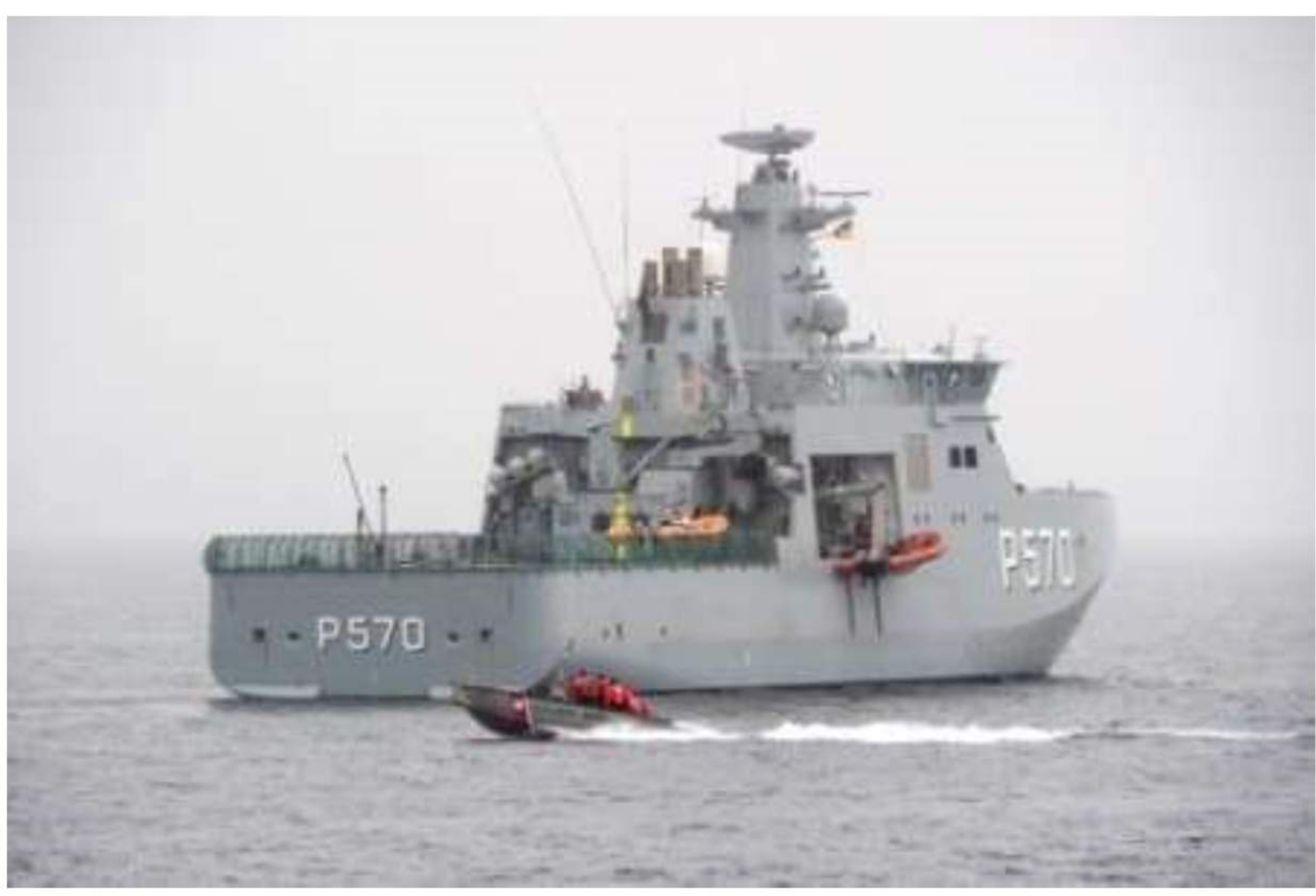
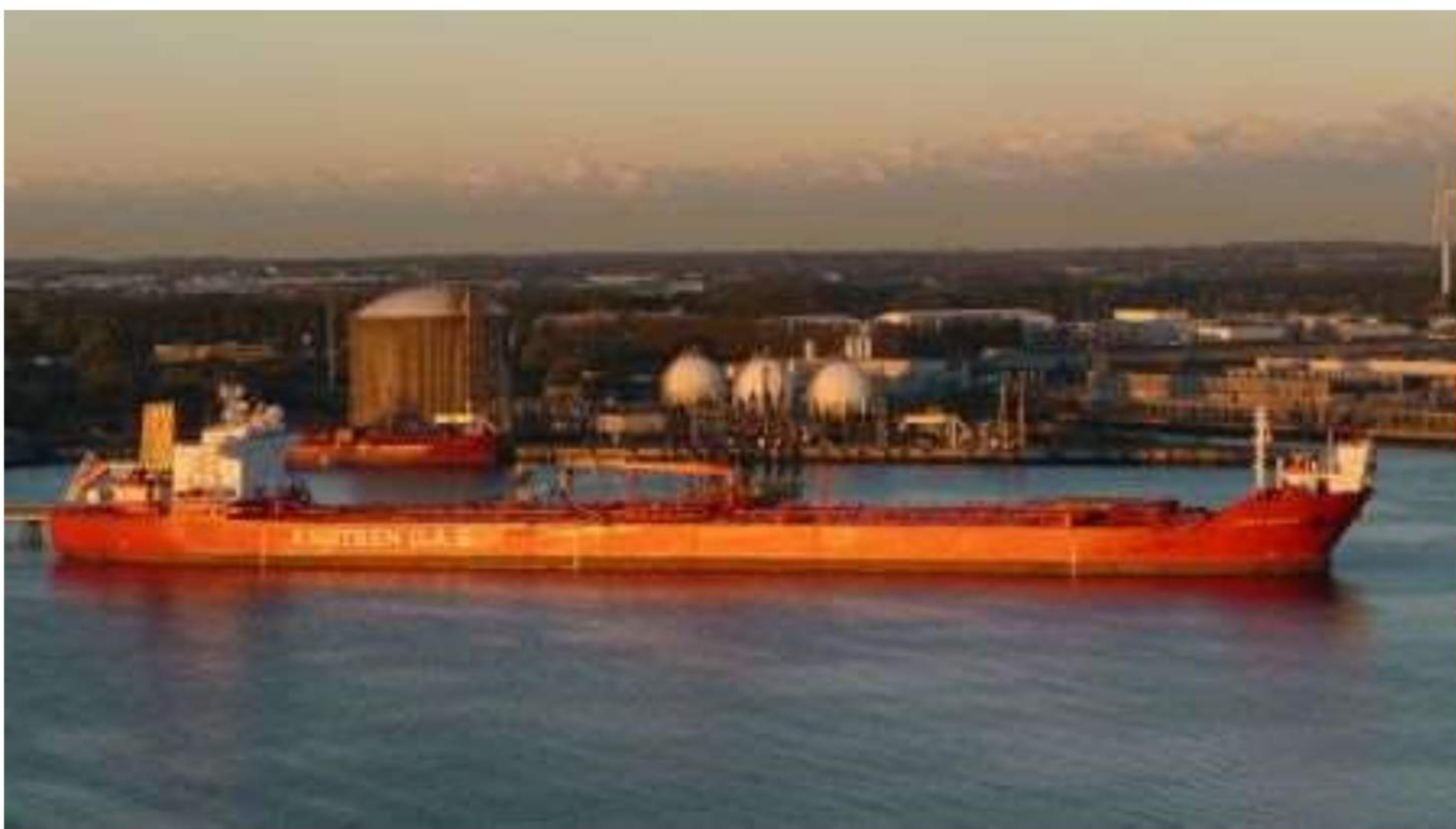
Shuttle tanker. A ship designed for transportation of oil or gas from an offshore oil field to wherever it may be required. It is highly sophisticated, with loading and offloading equipment compatible with the oil field infrastructures. Position keeping for longer durations is generally done with dynamic positioning, with respect to the arrangement of the installations or FPSOs; well backed-up safety systems ensure the potentially flammable oil and natural gas are handled safely.
12.3.3 Construction and special purpose vessels
Ships that primarily aid in the construction of high-seas structures are the offshore construction vessels. The group also includes vessels giving anchorage and tugging assistance and vessels that help in positioning deep sub-water cables and piping lines.
The main types:
- Diving support vessel
- Crane vessel
- Pipe laying vessel
Cable lay and repair vessels. Modern fibre-optic cables joining the world through the World Wide Web are more fragile than the thicker traditional cables, with more limitations on loading and bending; avoiding structural loss to the cables in handling is the whole design point of the type.
12.4 Dynamic positioning
12.4.1 The DP system — definition and principle
Dynamic positioning (DP) is a method of positioning specially designed marine vessels within predefined limits at sea using a combination of computers, thrusters, and position reference systems/units.
The principle:
Dynamic positioning works on the principle of using propulsion to work against the effects of displacing forces such as wind, current and wave action.
It covers two duties: maintaining a position, or following a pre-determined track, for the various jobs of the offshore and sub-sea culture.
DP-capable vessels — DP ships — are highly manoeuvrable, fully functional, reliably self-propelled vessels that do not require any tugs at any phase of their sea operations. Vessels fitted with DP systems are capable of working in any depth or ocean environment.
12.4.2 Where DP is used, and why it evolved
DP is most commonly used in vessels performing:
- Diving, drilling, ROV, pipe-laying, cable-laying, FPSO, and supply or multi-purpose support operations.
The list is not closed: if need be, DP systems could be fitted to any type or shape of seagoing vessel.
Four reasons drove its evolution:
- Job effectiveness — safe station keeping and manoeuvring, commanding intricate operations safely and efficiently.
- Financial flexibility and time saving in developing and maintaining the systems.
- Operations where conventional sub-sea and platform moorings are not practicable, for operational and safety reasons.
- Oil explorations requiring complex operations that conventional vessels cannot undertake alone.
The trade. DP vessels conclude short tasks rapidly, and their operations evade the hazard of damaging seabed infrastructure with mooring lines and anchors. Against that: higher capital investment and running expenditure — more fuel consumption, costly equipment and systems, and trained manpower to handle them.
12.4.3 The diving support scenario
The typical scenario is a diving support vessel working all four sides of a platform involved in sub-sea operations — moving around the platform quickly and safely by DP. Without DP and technically sound systems the same operation becomes extremely time-consuming and practically unsafe. A DP vessel is therefore designed to handle more than what a conventional moored vessel can.
12.4.4 DP vessels by type
Platform supply / offshore support vessels. Specially designed to supply offshore platforms and rigs, and among the most common DP users. They range from 50 to 100 metres in length with a diversity of tasks, primarily transporting supplies between platform and supply base ashore.
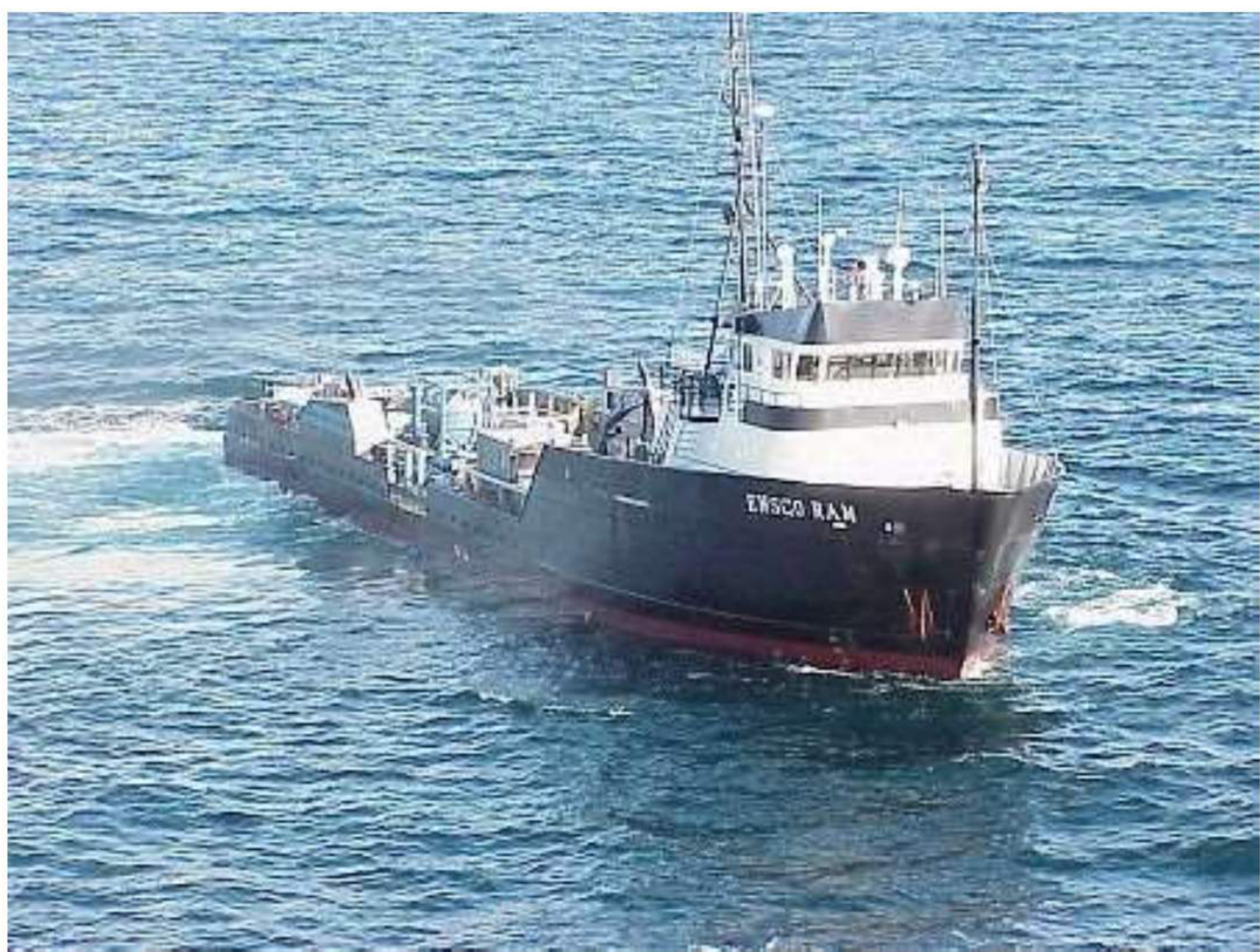
Diving and ROV support vessels. Built for commercial sub-sea operations: inspections and surveys, installation and configuration of sub-sea equipment, monitoring, and recovery of lost or abandoned equipment. ROVs — remotely operated vehicles — are gradually substituting divers in most jobs, but certain tasks still require manual involvement and cannot be done remotely.
Passenger vessels. Modern passenger vessels run shallow draught for access to more cruising destinations while carrying more passengers than ever, even with larger freeboards — a combination that causes ship-handling issues in tighter berths. DP answers the manoeuvring, berthing and even anchoring of these floating hotels more safely for crew and passengers.
Naval vessels. Advanced nations use DP in naval, coast guard and auxiliary fleets: sea-mine countermeasures, amphibious landing, submarine rescue and pollution control vessels all sail with DP fitted.