
Purifier Shutdown and Emergency Stop
How do you stop a purifier safely during normal operation and during an emergency?
Key Principles at a Glance 8 points
- Normal shutdown is sequenced so the bowl is never left full of oil: stop feed, displace or discharge the bowl contents, stop the heater, then let the bowl coast down.
- Emergency stop puts safety first — stop the feed and the drive immediately — and accepts that the bowl will coast down with oil still inside.
- High vibration, abnormal sound or a mechanical fault calls for an immediate emergency stop, not a normal stop.
- Replacement water is used during stopping to displace oil from the bowl, so the machine does not restart with oil left inside.
- A final sludge discharge is normal practice during a normal stop, but is omitted in an emergency.
- The heater is shut down before the bowl stops, so oil is not left hot and unattended in the bowl.
- Complete stop must be confirmed — the bowl has to be at rest before any work, isolation or restart is attempted.
- After an unplanned stop the cause must be found and corrected before restart, not simply reset.
1. Learning objectives
Course position: Topic 12 of the purifier learning sequence
Main question: How do you stop a purifier safely during normal operation and during an emergency?
After studying this lesson, you should be able to:
- Explain why purifier shutdown must be sequenced.
- Describe a normal automatic stop.
- Describe a manual stop.
- Explain the emergency response to excessive vibration or abnormal sound.
- Distinguish normal coast-down vibration from dangerous vibration.
- Explain replacement water and final sludge discharge.
- State when the heater, feed, valves, and motor are stopped.
- Confirm that the bowl has completely stopped.
- Explain post-stop isolation and inspection requirements.
- Answer the examination question on purifier shutdown and emergency stopping.
2. Why shutdown sequence matters
A purifier contains:
- A high-speed rotating bowl
- Hot oil
- Water under pressure
- Accumulated sludge
- Moving hydraulic components
- A pressurised outlet system
Stopping the motor alone is not the complete shutdown procedure.
A correct normal stop must:
- Stop or divert oil feed.
- Complete the programmed replacement-water and sludge-discharge sequence.
- Stop the heater.
- Allow the bowl to stop completely.
- Close feed and other valves.
- Isolate the system as required.
- Confirm that it is safe before inspection.
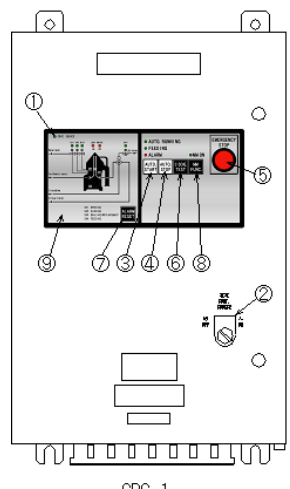
The Mitsubishi automatic-stop function switches the feed valve to bypass, performs water replacement and sludge discharge, then cuts the automatic running circuit and stops the purifier motor.
3. Normal stop versus emergency stop
Normal stop
Used when:
- The purifier is no longer required.
- The treatment tank is empty.
- A watch change requires shutdown.
- Maintenance is planned.
- The system is being changed over.
The purifier is allowed to complete its controlled sequence.
Emergency stop
Used when continued rotation creates danger.
Examples:
- Excessive vibration
- Contact or rubbing sound
- Abnormal bearing sound
- Failure to reach or maintain safe speed
- Serious oil or water leakage
- Dangerous current rise
- Mechanical failure
- Uncontrolled operation
The Mitsubishi manual warns that unusually large vibration or abnormal sound requires immediate stopping.
Key difference
4. Normal automatic-stop sequence
A typical automatic sequence is:
The exact order differs by purifier model and automatic-control system. Follow the installed manual.
5. Normal stop: step-by-step
Step 1 — Confirm the stop is planned
Before stopping:
- Confirm the receiving tank or alternate purifier is ready.
- Check whether the engine system still needs treated oil.
- Inform the responsible watchkeeper if required.
- Confirm that no automatic discharge is already in progress.
Step 2 — Stop or bypass the feed
Use the AUTO STOP control or the approved manual procedure.
The feed valve should close or switch the liquid to the bypass line.
Do not stop the motor while continuing to feed oil unless the emergency procedure specifically requires it.
Step 3 — Complete replacement and sludge discharge
Allow the programmed sequence to:
- Replace the liquid condition.
- Open the bowl.
- Discharge water and sludge.
- Close the bowl.
- Restore the seal.
Confirm discharge by:
- Current change
- Discharge sound
- Detector indication
- Sludge/water movement
Step 4 — Stop the oil heater
The normal stop procedure includes stopping the oil heater after the feed or purification process has been stopped according to the maker’s sequence.
Stopping the heater prevents:
- Unnecessary heating of stagnant oil
- Oil deterioration
- Excessive temperature
- Energy waste
Step 5 — Confirm the motor stops
After the automatic sequence is complete, the motor stops.
Do not open the frame cover immediately. The bowl may still be coasting down.
Step 6 — Confirm complete stop
Confirm using an approved indication such as:
- Gear-pump safety joint
- Motor fan
- Speed indication
- Zero-speed signal
- Manufacturer’s stop indicator
The Mitsubishi manual specifically instructs the operator to confirm complete stopping before inspection or dismantling.
Step 7 — Close and isolate valves
After complete stop:
- Close dirty-oil inlet valve.
- Close butterfly valve where applicable.
- Close other specified valves and cocks.
- Switch off operating-water tank power as required.
- Purge boosting air where the procedure requires it.
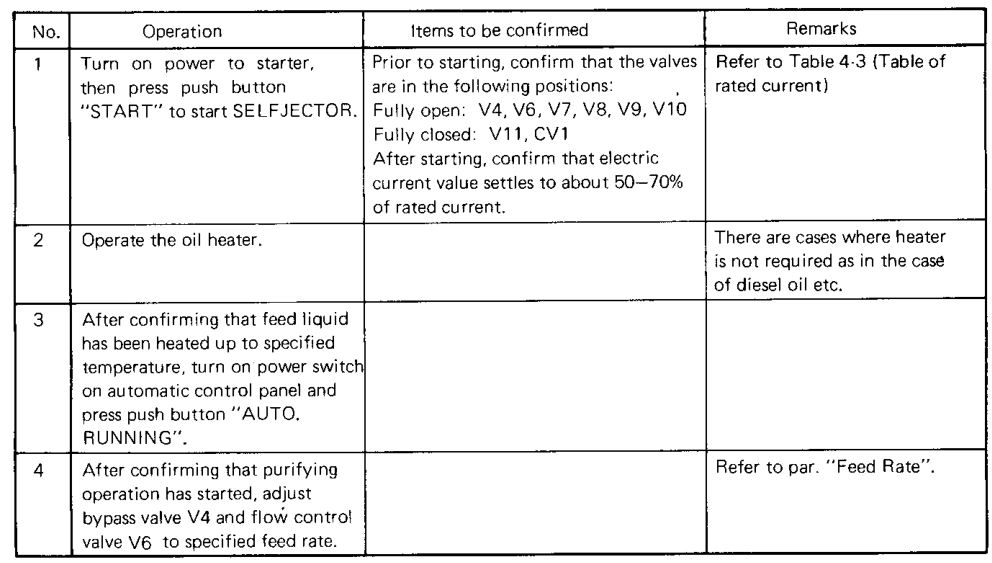
6. Normal stop procedure from the operation manual
The Mitsubishi total-discharge procedure states, in summary:
- Stop the oil heater.
- Press AUTO STOP on the automatic control panel.
- Confirm that the feed valve closes.
- Allow replacement water, sludge discharge, and stop to proceed.
- Confirm that the purifier has stopped completely.
- Close the dirty-oil inlet valve and butterfly valve.
- Confirm that other valves and cocks are closed.
- Switch off or isolate the operating-water tank as required.
7. Coast-down after motor stop
When the motor is stopped, the bowl does not stop instantly.
The bowl passes through lower speeds while decelerating. Vibration can increase temporarily while passing through a critical speed during coast-down.
The Mitsubishi manual states that this can be a transient and normal phenomenon during stopping.
Important distinction
- Temporary coast-down vibration: may be normal.
- Large vibration that begins suddenly or remains abnormal: treat as dangerous.
Do not use coast-down vibration as a reason to open the purifier early.
8. Emergency stop: first priority
If excessive vibration or abnormal sound occurs, safety takes priority over normal discharge.
The emergency principle is:
The Mitsubishi manual instructs that unusually large vibration or contact/bearing sound requires immediate stopping.
Do not delay for
- Normal sludge discharge
- Normal replacement water
- A complete automatic-stop sequence
- A clean-oil flush
- A convenient tank changeover
If continued rotation is dangerous, stop the machine first.
9. Emergency stop procedure: general form
The exact procedure depends on the installed panel and purifier configuration.
A typical emergency response is:
- Press STOP FEEDING if available to close the feed valve.
- Press the starter STOP or EMERGENCY STOP control.
- Stop the heater if this can be done safely.
- Keep personnel clear.
- Do not attempt to open the bowl.
- Wait until the bowl has stopped completely.
- Isolate electrical power.
- Isolate operating water if required.
- Record the event.
- Inspect and identify the cause before restarting.
For an emergency involving large vibration or abnormal sound, the Mitsubishi manual specifically gives the sequence of stopping feed and then pressing the starter STOP button.
10. Emergency stop for a high-vibration condition
Situation
The purifier develops strong vibration at rated speed.
Correct response
Possible causes
- Uneven sludge accumulation
- Disc-stack imbalance
- Damaged bowl part
- Bearing failure
- Spindle damage
- Bowl contact
- Loose foundation
- Foreign object
- Incorrect assembly
- Ship vibration or installation problem
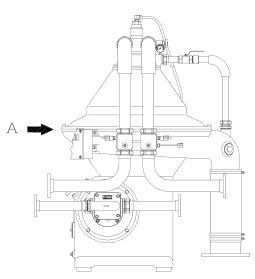
The safety manual states that excessive vibration may be caused by unbalance, ship oscillation, or installation and that the purifier must be stopped immediately.
11. Emergency stop for abnormal sound
Abnormal sounds include:
- Contact sound
- Rubbing sound
- Bearing-section noise
- Repeated knocking
- Sudden grinding noise
- Unusual gear noise
Immediate action:
- Stop feed.
- Stop the purifier.
- Keep the bowl closed and untouched.
- Wait for zero speed.
- Isolate power.
- Inspect only after safe isolation.
Do not assume a new sound is caused by normal sludge discharge.
12. Emergency stop without sludge discharge
During a severe mechanical emergency, normal sludge discharge may be unsafe.
The Mitsubishi control-panel description states that emergency stop cuts the automatic running circuit and switches the feed valve to bypass, then stops the motor without sludge discharging.
This is logical because opening the bowl during severe vibration may worsen:
- Mechanical instability
- Leakage
- Bowl damage
- Uncontrolled discharge
After the bowl stops completely, the operator can decide how to handle the sludge under the maintenance procedure.
13. Emergency stop procedure examples
Example A — severe vibration in an alarm-panel configuration
The manual procedure includes:
- Press STOP FEEDING to close the feed valve.
- Stop the oil heater.
- Refill the bowl with the specified replacement water if the procedure allows and the machine is safe.
- Open the specified discharge cock for the stated time.
- Confirm discharge by current change or discharge sound.
- Press STOP on the starter.
Example B — severe vibration in an alternate configuration
The manual gives an alternate sequence:
- Turn the Multi-Monitor function switch OFF.
- Stop the oil heater.
- Open the return and bypass valves.
- Close the feed-liquid inlet valve.
- Refill the bowl with specified replacement water.
- Open the discharge cock for the specified short period.
- Confirm discharge.
- Press STOP on the starter.
These examples differ because purifier/control configurations differ. Use the exact installed manual.
14. Why replacement water may be used during stopping
Replacement water can restore the liquid arrangement before final discharge or shutdown.
It may:
- Displace treated oil from an area that will be discharged.
- Prepare the bowl for sludge discharge.
- Help prevent oil loss through an uncontrolled path.
- Restore the heavy-liquid region.
Replacement-water quantity and timing are model-specific.
Do not improvise water quantities. Use the maker’s table and procedure.
15. Final sludge discharge during normal stop
A normal stop often includes a final discharge because the bowl contains accumulated solids.
Benefits:
- Reduces sludge remaining during standstill.
- Prevents deposits from hardening.
- Makes post-stop inspection easier.
- Reduces imbalance during the next start.
- Leaves the bowl in a known condition.
The final discharge must be completed before isolating the machine, unless an emergency condition makes discharge unsafe.
16. Closing the feed path
After the purifier has stopped completely, close the specified valves.
Typical valves include:
- Dirty-oil inlet valve
- Butterfly valve
- Feed valve
- Bypass valve, depending on system
- Purified-oil outlet valve, when required
- Water shut valve
Valve closure prevents:
- Gravity flow into the bowl
- Oil leakage
- Uncontrolled water entry
- Cross-connection between tanks
- Accidental restart flow
Always confirm the installed system’s valve numbers and labels.
17. Heater shutdown
The heater must be stopped at the correct point in the sequence.
Why heater shutdown matters
If the heater continues after feed stops:
- Stagnant oil may overheat.
- Oil may degrade.
- Heater surfaces may become excessively hot.
- Energy is wasted.
- Fire risk increases.
For normal stop, the manuals place heater shutdown within the controlled stopping sequence.
For emergency stop, stop the heater as soon as safely practical after stopping feed or the machine.
18. Confirming complete stop
Never rely only on the motor sound stopping.
Confirm complete bowl stop using the approved indication:
- Gear-pump safety joint
- Motor fan
- Zero-speed indicator
- Speed display
- Maker’s mechanical stop point
The Mitsubishi manual specifically identifies observing the gear-pump safety joint or motor fan as a way to confirm that the Selfjector has stopped.
19. Post-stop isolation
After complete stop:
- Switch off the starter.
- Isolate electrical power before inspection.
- Isolate feed oil.
- Isolate operating water where required.
- Close relevant valves.
- Depressurise or drain safe sections according to the manual.
- Purge operating-water tank air if required.
- Secure the work area.
- Record the shutdown condition.
The manufacturer warns that power must be switched off before dismantling and inspection.
20. Normal stop versus emergency stop table
| Item | Normal stop | Emergency stop |
|---|---|---|
| Feed | Controlled stop or bypass | Stop immediately |
| Sludge discharge | Normally completed | Only if safe and specified |
| Replacement water | Programmed sequence | Only under approved procedure |
| Heater | Stop in sequence | Stop as soon as safe |
| Motor | Stop after sequence | Stop immediately after feed isolation |
| Main priority | Correct shutdown and clean bowl | Personnel and machine safety |
| Opening cover | Only after zero speed | Only after zero speed and isolation |
| Restart | After normal checks | Only after cause is identified and corrected |
21. Faults after shutdown
Bowl does not stop
Possible causes:
- Motor or starter problem
- Mechanical drive fault
- Brake not operating
- Safety joint problem
- Control fault
Keep clear and isolate according to emergency procedure.
Bowl vibrates during coast-down
Some vibration may be normal while passing a critical speed. Persistent or violent vibration is not normal.
Check:
- Whether vibration decreases as speed falls.
- Whether contact sound is present.
- Whether a mechanical alarm occurred.
- Whether the bowl reached rated speed normally before stopping.
Bowl cannot be inspected
Do not proceed until:
- Bowl is fully stopped.
- Starter is isolated.
- Electrical power is off.
- Operating water is isolated if required.
- Stored pressure is safely released.
22. Restart after an unplanned stop
An unplanned stop is not automatically followed by an immediate restart.
First determine why it stopped
Check:
- Alarm history
- Vibration
- Sound
- Current
- Speed
- Temperature
- Outlet pressure
- Water and oil leakage
- Discharge state
- Electrical controls
Lubricating-oil purifier restart
The Mitsubishi manual cautions that after certain long stoppages, sludge density can increase in the sump tank. It recommends a period of operation with more frequent sludge discharge before returning to standard intervals.
Therefore after a long stop:
- Expect denser sludge.
- Use the manufacturer’s recommended shorter discharge interval.
- Monitor vibration and outlet quality.
- Do not immediately assume standard discharge settings are suitable.
23. Automatic-stop controls
The automatic panel may include:
- AUTO START
- AUTO STOP
- EMERGENCY STOP
- DISCHARGE TEST
- Alarm reset
- Multi-Monitor function switch
- Graphic display
- Operation display
AUTO STOP
Normally:
- Feed valve closes or switches to bypass.
- Replacement water is supplied.
- Sludge discharge occurs.
- The motor stops.
EMERGENCY STOP
Normally:
- Automatic running circuit is cut.
- Feed is bypassed or stopped.
- Motor stops without waiting for normal sludge discharge where configured.
DISCHARGE TEST
A discharge-test button may force the timer to complete so discharge can be tested during automatic feeding. Use only under the maker’s procedure.
24. Stop process flow chart
25. Shutdown mistakes to avoid
Mistake 1: Stopping the motor while feeding oil normally
This can leave oil in an unstable bowl and create carry-over or leakage.
Mistake 2: Opening the frame cover before zero speed
The bowl may still be rotating.
Mistake 3: Treating all vibration during stopping as abnormal
Some coast-down vibration can occur at critical speed; dangerous vibration must still be distinguished by severity and sound.
Mistake 4: Treating all vibration as normal
Persistent or large vibration at rated speed or during an abnormal event requires immediate stopping.
Mistake 5: Waiting for sludge discharge during a severe mechanical emergency
Safety takes priority; emergency stop may occur without normal discharge.
Mistake 6: Forgetting the heater
Stagnant hot oil may deteriorate or overheat.
Mistake 7: Restarting without finding the cause
An unexplained stop may be caused by a dangerous mechanical fault.
Mistake 8: Closing valves before the automatic sequence completes
Premature closure can prevent replacement water, discharge, or resealing.
26. Normal shutdown checklist
- [ ] Confirm planned shutdown.
- [ ] Confirm alternate treatment route if needed.
- [ ] Press AUTO STOP or use approved manual procedure.
- [ ] Confirm feed valve closes or switches to bypass.
- [ ] Confirm replacement water sequence.
- [ ] Confirm sludge discharge.
- [ ] Stop oil heater.
- [ ] Confirm automatic circuit stops the motor.
- [ ] Confirm complete bowl stop.
- [ ] Close dirty-oil inlet valve.
- [ ] Close butterfly valve where applicable.
- [ ] Close other specified valves and cocks.
- [ ] Isolate operating-water tank as required.
- [ ] Purge air where required.
- [ ] Record shutdown condition.
27. Emergency-stop checklist
- [ ] Identify immediate danger.
- [ ] Stop feed or press STOP FEEDING.
- [ ] Press starter STOP or EMERGENCY STOP.
- [ ] Stop heater as soon as safe.
- [ ] Keep clear of the frame, bowl, and discharge outlet.
- [ ] Do not open plugs or covers.
- [ ] Wait for complete stop.
- [ ] Switch off and isolate the starter.
- [ ] Isolate operating water if required.
- [ ] Record sound, vibration, current, speed, and alarm information.
- [ ] Inspect only after safe isolation.
- [ ] Do not restart until the cause is corrected.
28. Revision questions with answers
Question 1
What is the first action in a normal stop?
Answer: Stop or bypass the feed through the approved automatic or manual sequence.
Question 2
Why is sludge normally discharged during a planned stop?
Answer: To leave the bowl cleaner, reduce deposits, and prepare it for safe standstill or restart.
Question 3
When is the heater stopped?
Answer: In the specified shutdown sequence, after feed is stopped or bypassed as required.
Question 4
Why must the bowl completely stop before inspection?
Answer: It remains a high-speed rotating mass after the motor is switched off.
Question 5
What can happen during coast-down?
Answer: Temporary vibration may occur while passing through critical speed.
Question 6
What conditions require emergency stop?
Answer: Excessive vibration, contact sound, abnormal bearing sound, dangerous leakage, or other immediate hazards.
Question 7
Should normal sludge discharge delay an emergency stop?
Answer: No. Safety takes priority over normal discharge.
Question 8
What does AUTO STOP normally do?
Answer: Closes or bypasses feed, performs replacement and sludge discharge, and stops the motor.
Question 9
How is complete stop confirmed?
Answer: By the approved zero-speed indication, such as the safety joint, motor fan, or speed display.
Question 10
What must happen before dismantling?
Answer: Complete stop, starter isolation, power off, and safe isolation of relevant water and oil systems.
Question 11
Why can restart after a long lubricating-oil shutdown require more frequent discharge?
Answer: Sludge can become denser through settling in the sump tank.
Question 12
What should be done after an unexplained emergency stop?
Answer: Identify and correct the cause before restarting.
29. Self-test scenario
Scenario
A purifier at rated speed suddenly develops strong vibration and a scraping sound.
State the correct response:
- Stop feed immediately.
- Press the emergency or starter stop control.
- Stop the heater when safe.
- Keep personnel away from the bowl.
- Do not open the frame cover.
- Wait for complete stop.
- Isolate power and operating water.
- Record readings and alarm history.
- Inspect bowl, discs, spindle, bearings, sludge condition, and foundation.
- Restart only after the cause is corrected.
Scenario 2
A planned stop is required at the end of a watch.
Correct sequence: