

Emergency Safeguards: Remote Fuel Shut-offs, Skylights & Fire Dampers
Master shipboard emergency safeguards: SOLAS II-2 remote fuel shut-offs, quick closing valves (QCV), ventilation fire dampers, skylight closures, and machinery emergency stops.
1. Statutory Framework & Fire Starvation Philosophy
In the event of a catastrophic machinery space fire at sea, containment depends entirely on the ship's external Emergency Safeguards. Under SOLAS Chapter II-2 Regulation 5 (Fire Growth Potential) and Regulation 9 (Containment of Fire), every vessel must be equipped with remote controls located outside the machinery compartment to isolate the three legs of the combustion triangle:
| Combustion Component | Physical Containment Goal | Emergency Safeguard Mechanism | Statutory Control Location |
|---|---|---|---|
| Fuel (Hydrocarbons) | Starve flammable liquid feed to burst pipes and hot surfaces | Quick Closing Valves (QCV) & Remote Fuel/Lube Pump Emergency Trips | Fire Control Station / Upper Deck Locker |
| Oxygen (Air Ingress) | Choke air intake and eliminate chimney-effect stack updraft | Ventilation Fire Dampers, Skylight Closures & Funnel Annular Flaps | Weather deck / Fire Control Station / Boat Deck |
| Heat / Ignition | Eliminate electrical arcing and machinery friction sources | Machinery space emergency circuit-breaker trips & purifier shutdowns | Emergency Switchboard / Fire Control Station |
Danger — Critical Watchkeeper Rule
Once an engine room fire is beyond portable extinguisher capability, evacuation, closure, and starvation take precedence over everything else. Actuating remote stops and shutting fire dampers/skylights must precede any fixed gas discharge (such as CO2 or local water mist) to prevent the extinguishing medium from being blown out or diluted by fresh air.
2. Remote Fuel Shut-offs & Quick-Closing Valves (QCV)
Fuel and lubricating oil tanks located within or above machinery spaces represent thousands of tonnes of potential fuel feed. Under SOLAS, every fuel oil suction pipe leading from tanks situated above double bottoms (settling tanks, service tanks, diesel oil daily tanks, and incinerator waste tanks) must be fitted with a valve capable of being closed from a safe position outside the space.
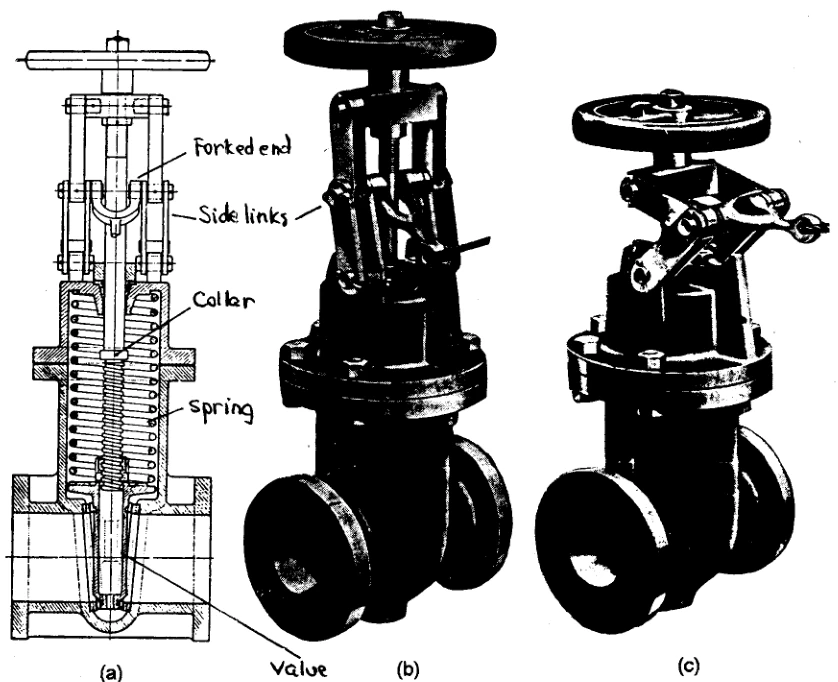
Actuation Mechanisms for Quick-Closing Valves
Three primary remote release systems are encountered across modern merchant vessels:
- Pneumatic Trip Cabinets: The most widespread system on modern tonnage. A dedicated compressed air bottle (or nitrogen bottle) charged to 7 to 10 bar is mounted in an external fire control locker. Opening the cabinet and striking the actuator lever directs pneumatic pressure through copper/steel capillary lines directly to small release cylinders mounted on each QCV. The piston strokes down, unlatching the collapsing bridge and allowing heavy internal springs to slam the valve disc onto its seat in less than 2 seconds.
- Hydraulic Release Systems: A manual hydraulic hand-pump charges a fluid accumulator manifold. Depressing individual selector valves or a master trip lever vents hydraulic backpressure, causing the spring-assisted valve spindles to seat firmly.
- Mechanical Pull-Wire Systems: Stainless steel flexible cables run inside pulleys from remote pull-boxes on the weather deck to weighted release triggers on the valve bonnet. Pulling the handle extracts a locking toggle pin, permitting the counterweight or internal spring to drive the valve shut.
Warning — Common Deficiency: The "Gagged" QCV
During surveys, Port State Control inspectors frequently discover wooden blocks, wire ties, or steel clamps wedged under QCV spindles to prevent nuisance trips during testing. Gagging any QCV is an immediate ship detention deficiency under SOLAS, as it strips the vessel of emergency fuel isolation.
3. Engine Room Skylights, Funnel Flaps & Annular Openings
An engine room fire acts like a blast furnace: hot combustion gases rush toward the top casing, creating a powerful convective suction that draws thousands of cubic metres of fresh air through open skylights and vents. Rapidly closing these top openings is essential to extinguish the chimney effect.
A. Engine Room Skylights
Machinery space skylights are fabricated from heavy-gauge structural steel. Under SOLAS:
- Skylights must have heavy steel closing covers that can be locked tightly dog-down from outside the machinery casing.
- Any viewing ports must be fitted with wired glass panes and provided with externally operable steel deadlights.
- Skylight closing arrangements are typically operated via hydraulic hand-pumps, pneumatic release pistons, or counterbalanced wire trips situated on the boat deck or poop deck. When released, gravity drives the heavy steel flaps onto heat-resistant neoprene/graphite gaskets.
B. Funnel Flaps & Exhaust Annular Dampers
The annular space between the engine room casing and the main exhaust uptakes represents a continuous chimney vent directly to the atmosphere:
- Funnel Flaps: Heavy hinged steel dampers located inside the funnel casing to close off exhaust ventilation shafts and natural draft openings.
- Operating Gear: Operated from the main deck or steering flat by dedicated worm-gear handwheels or pneumatic rams. They must be equipped with mechanical indicators showing positive OPEN and CLOSED positions.
- Maintenance Protocol: Funnel flaps are exposed to corrosive marine air and hot flue soot. Weekly routines require greasing hinge pins, checking balance weights, and verifying that flaps seat flush without binding.
4. Ventilation Fire Dampers & Duct Isolation
Ventilation ducts running through bulkheads and decks can spread smoke, toxic gases, and flames across fire divisions within minutes. Fire dampers are precision mechanical louvers installed inside the ductwork to preserve boundary fire integrity.
Types of Shipboard Ventilation Dampers
- Automatic Fusible Link Dampers: The damper blades are spring-loaded toward the closed position but held open by a low-melting eutectic alloy link (typically designed to fuse at 70°C to 74°C; up to 100°C in boiler rooms). When passing hot flue gases melt the link, the spring immediately slams the multi-leaf blades shut.
- Remote Pneumatic / Electric Dampers: Actuated by spring-return pneumatic cylinders or motorized solenoids. In the event of an emergency, actuating the remote fire control panel vents control air or cuts electrical power, causing the internal mechanical spring to drive the damper into its failsafe closed position.
- Manual External Flaps: Engine room intake and exhaust weather heads on the open deck are fitted with manual closing flaps secured by dog bolts and wing nuts.
Mandatory Inspection Hatches
SOLAS requires every fire damper in an accommodation or machinery duct to have an easily accessible inspection door. This allows crew members to visually inspect blade seating, clean soot accumulation, and replace corroded fusible links without dismantling duct sections.
5. Machinery Emergency Stops & Electrical Trip Circuits
In addition to closing fuel valves, the prime movers and electric pumps feeding flammable liquids must be stopped immediately to relieve hydraulic pressure in broken pipes.
Statutory Groups of Machinery Emergency Stops
External emergency push-buttons (located in the Fire Control Station, Emergency Generator Flat, or Wheelhouse) are organized into segregated trip groups:
| Emergency Stop Group | Machinery Units Controlled | Hazard Prevented |
|---|---|---|
| Group 1: Fuel Oil Pumps | Main fuel booster pumps, supply pumps, transfer pumps, blending pumps | High-pressure spray of fuel (up to 8 bar) onto hot engine exhaust manifolds. |
| Group 2: Lubricating Oil Pumps | Main engine LO service pumps, camshaft LO pumps, crosshead booster pumps, reduction gear pumps | Flooding engine sumps and continuous feeding of crankcase/scavenge fires. |
| Group 3: Boiler Forced/Induced Draft Fans | Auxiliary boiler FD fans, thermal fluid circulating pumps, burner fuel pumps | Furnace backfiring and continuous oxygen feed to boiler casing fires. |
| Group 4: Engine Room Ventilation Fans | Supply fans, exhaust fans, workshop blowers, purifier room exhausters | Oxygen delivery to the fire and smoke distribution across accommodation trunking. |
| Group 5: Centrifugal Purifiers | Heavy fuel oil purifiers, diesel oil purifiers, lube oil separators | Centrifugal discharge of boiling fuel and high-speed mechanical friction ignition. |
Electrical Trip Architecture: Undervoltage vs. Shunt Trips
Emergency stop push-buttons operate using fail-safe undervoltage release (UVR) coils or normally closed series circuit loops:
- In an undervoltage tripping loop, control power is continuously passed through the emergency stop buttons in series. Pressing any stop button breaks the circuit, de-energizing the main contactor coil and causing the breaker to trip open instantly by spring action.
- If an emergency stop control wire is severed or suffers an open circuit during a fire, the system fails safe by automatically tripping the associated pump or fan motor.
6. Maintenance Routines, Surveyor Checks & Emergency Sequence
During Class and Flag State annual safety equipment surveys, the surveyor will witness testing of all emergency safeguards:
- Monthly QCV trip testing. Test QCVs on non-essential fuel tanks (e.g. transfer tanks or idle settling tanks) by operating remote pull-wires or pneumatic levers. Confirm mechanical latch release and verify full spindle descent.
- Skylight & fire damper operation. Operate remote closure handles on weather decks. Verify dampers swing smoothly and close tightly without binding. Clean louver tracks and lubricate brass pivot bushings.
- Emergency stop group verification. Coordinate with duty engineers. Start an idle transfer pump or vent fan, press the remote emergency stop button in the Fire Control Station, and verify that the pump contactor instantly drops out.
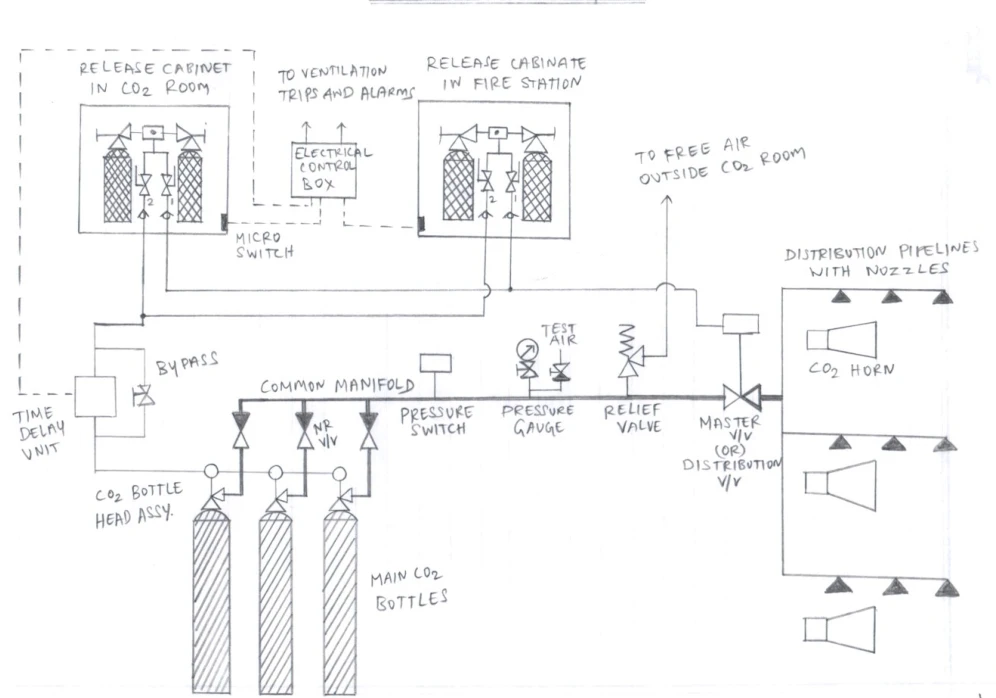
- Fixed fire system interlock check. Open the CO2 release cabinet door (with pilot gas bottles isolated for drill safety). Verify that the door limit switch activates the machinery space fire alarms and simultaneously trips all engine room ventilation fans.
Standards & sources referenced
- SOLAS: International standards for the safety of life at sea.
- Conventions index
Practise this in the question bank
- Medical, Emergency & Survival — 5 questions
Found a mistake, or something unclear?
Report it in a few seconds — it goes straight to the editors.
- Major Certificates & Documents to Carry On Board
- The Saturday Routine: Planned Maintenance Checks
- Dry-Docking: Preparation, Procedure & Survey
- Bunkering & Oil Transfer: Precautions & Procedures
- Conditions of Assignment of Freeboard
- Why Oil Tankers Have Less Freeboard
- Safety on Oxygen & Acetylene Bottles
- Tonnage Measurement: Gross & Net Tonnage
- Load Line: Marks, Letters & Conventions
- Loadicator / Loading Computer
- Difference Between Audit and Survey
- Emergency Generator: Testing & Requirements
- MGPS — Marine Growth Prevention / Anti-Fouling System
- Quick Closing Valve: Construction & Working
- How to Measure the Depth of the Ship (Echo Sounder)
- New Amendments (1 January 2013): SOLAS & MARPOL
- Ship Accommodation, Midship Section & Container Stowage
- Rudder: Construction, Types & Support
- Fuel Consumption & Speed Relationship
- Maritime Codes & Conventions: The Complete List
- STCW: The Convention & Its Eight Chapters
- Emergency Safeguards: Remote Fuel Shut-offs, Skylights & Fire Dampers