
MGPS — Marine Growth Prevention / Anti-Fouling System
How copper and aluminium anodes use electrolysis to stop marine growth and corrosion in the sea water cooling system.
Key Principles at a Glance 6 points
- MGPS (Marine Growth Prevention System / Anti-Fouling System) runs on an electrolysis system and produces anti-fouling using specially alloyed anodes — copper (Cu) and aluminium (Al) anodes.
- Copper anodes are manufactured with copper as the major part; the copper anode produces ions which are transported by seawater into the pipework to prevent marine growth (anodic Cu → Cu²⁺ + 2e; cathodic 2H₂O + 2e → H₂ + 2OH⁻).
- Aluminium anodes are the supplementary part; their slow dissolution produces ions spread throughout the system that form an anti-corrosive layer on the internal surface of the sea water cooling lines (Al → Al³⁺ + 3e; product Al(OH)₃).
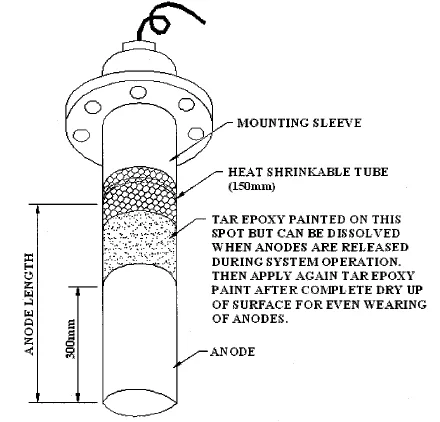
- The anodes are fixed in pairs into the sea chest in the direction of flow, and a control unit supplies the impressed current to the anodes.
- Marine growth consists of macro and micro organisms (shells, worms, etc.) that deposit and breed in the pipework; copper ions of less than 2 parts per billion are enough to create an unfriendly environment and prevent growth, and the aluminium film reduces corrosion.
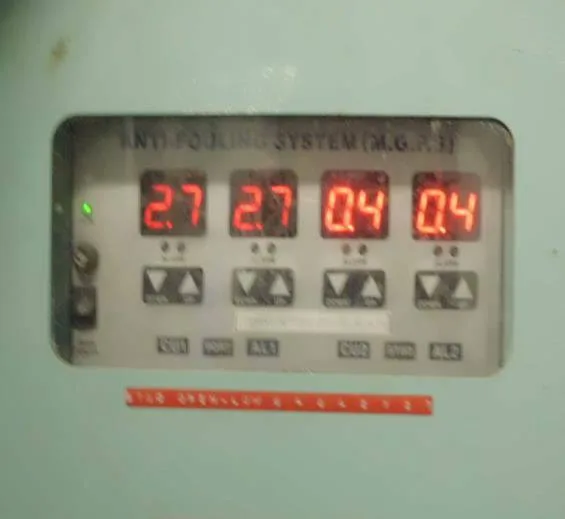
- If the proper impressed current is not applied the anodes do not work and pipe corrosion results; typical values on board are about 2.7 A each for Cu and Al with the sea chest in use, and 0.4 A when the sea chest is not in use.
1. Marine Growth & the MGPS
MGPS (Marine Growth Prevention System / Anti-Fouling System).
- Principle: MGPS runs on an electrolysis system.
- The system produces anti-fouling using specially alloyed anodes.
- There are two types of anode — Cu (copper) anodes and Al (aluminium) anodes.
What Is Marine Growth?
- Marine growth means sea water contains marine organisms which enter the ship and make deposits and flourish on parts of the system.
- It can cause damage to parts over a long period.
- It contains macro and micro organisms such as shells, worms, etc.
- These organisms stick into the pipelines, where they find space to grow given favourable temperature, pH and other conditions, and they start to breed.
2. Copper & Aluminium Anodes — Electrolysis Reactions
Copper (Cu) Anodes:
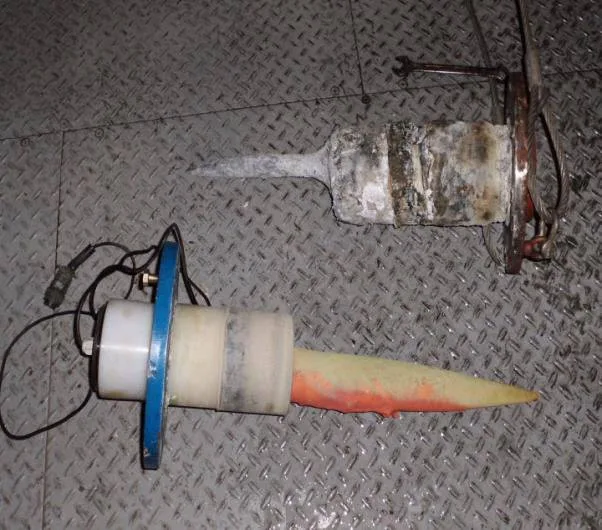
- Cu anodes are manufactured from copper as the major part of the system.
- The copper anode produces ions which are transported by the seawater and carried into the pipework system to prevent marine growth.
- They release ions during electrolysis as follows:
- Anodic reaction: Cu → Cu²⁺ + 2e⁻
- Cathodic reaction: 2H₂O + 2e⁻ → H₂ + 2OH⁻
Aluminium (Al) Anodes:
- Al anodes are manufactured from aluminium as the supplementary part of the system.
- The slow dissolution of the aluminium anode produces ions which spread throughout the system and produce an anti-corrosive layer on the internal surface of the sea water cooling lines.
- They release ions during electrolysis as follows:
- Anodic reaction: Al → Al³⁺ + 3e⁻
- Cathodic reaction: 3H₂O + 3e⁻ → 3/2 H₂ + 3OH⁻
- Product: Al³⁺ + 3OH⁻ → Al(OH)₃ (aluminium hydroxide, the anti-corrosive film).
Copper anode = anti-fouling (kills/prevent marine growth). Aluminium anode = anti-corrosion (forms a protective Al(OH)₃ film). This is why the MGPS uses both types together.
3. How the MGPS Prevents Growth & Corrosion
- When the system is in operation the copper anode produces ions which are carried by the water into the pipe and system.
- Copper ions of less than 2 parts per billion are enough to prevent marine growth, creating an unfriendly environment for the organisms.
- The organisms then have to be discharged via the discharge line.
- Due to the impressed current, the aluminium produces ions which spread over the system and produce an anti-corrosive film over the pipes and system internally, so they reduce corrosion.
Arrangement:
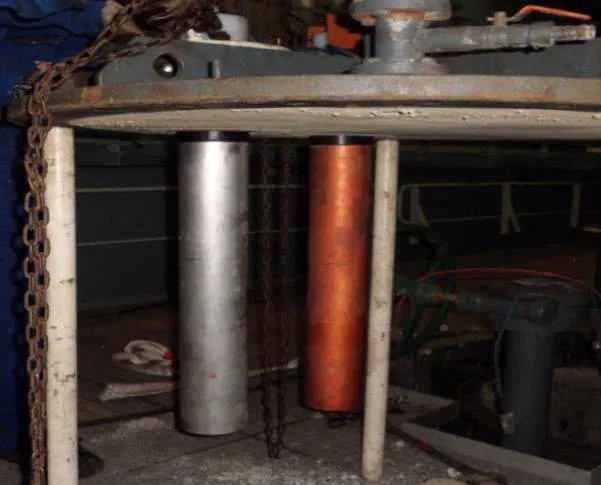
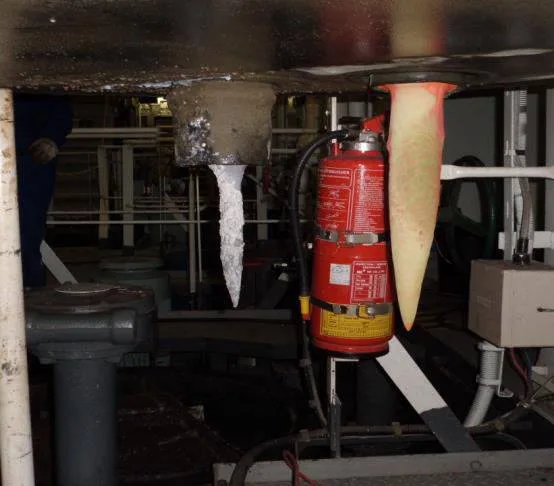
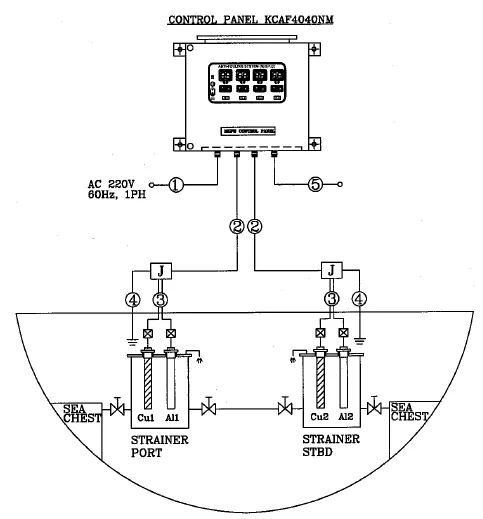
- There are two anodes — (1) Copper and (2) Aluminium.
- They are fixed in pairs into the sea chest, in the direction of flow of water.
- The MGPS system consists of a control unit which supplies impressed current to the anodes.
If you do not apply the proper impressed current, the anodes do not work properly and this results in pipe corrosion and other problems. The control unit must be maintained and set to the correct current for each anode.
4. Control Unit, Typical Values & Causes of Failure
Impressed Current:
- The control unit supplies impressed current to the anodes.
- If you do not apply the proper impressed current, the anodes do not work properly, causing pipe corrosion and other problems.
- Typical values observed on board (example vessel): Cu ≈ 2.7 A and Al ≈ 2.7 A with the sea chest in use; when the sea chest is not in use, about 0.4 A.
| Condition | Typical Anode Current |
|---|---|
| Sea chest in use | Cu ≈ 2.7 A · Al ≈ 2.7 A |
| Sea chest not in use | ≈ 0.4 A |
Causes of Problems (Effect of Marine Growth):
- Block the passage of cooling water.
- Heat transfer reduces.
- Overheating of machinery.
- Reduce the thickness of the pipe.
- Increased corrosion.
- Reduce efficiency, which reduces the speed of the ship.
Surveyors commonly ask: "What is the marine growth prevention system and how does it work?" Answer: MGPS / anti-fouling system using electrolysis with copper anodes (Cu²⁺ ions <2 ppb prevent growth) and aluminium anodes (Al(OH)₃ anti-corrosive film), fed by an impressed current control unit and mounted in pairs in the sea chest.