
Explosion Physics — Mist, Doors & Detectors
How 50 mg of oil per litre becomes a 30-atmosphere shock wave — and the three devices that stand in its way.
Key Principles at a Glance 5 points
- Normal mist droplets are too fat to burn; a hot spot evaporates and re-condenses them into 5–10 micron white mist that ignites readily.
- 50 mg/litre (~13% oil-air) is the lean explosive limit — longer flame paths make worse explosions.
- Primary deflagration breeds its own fuel ahead of the flame; relieved primary sucks air back for the secondary — the real ship-killer.
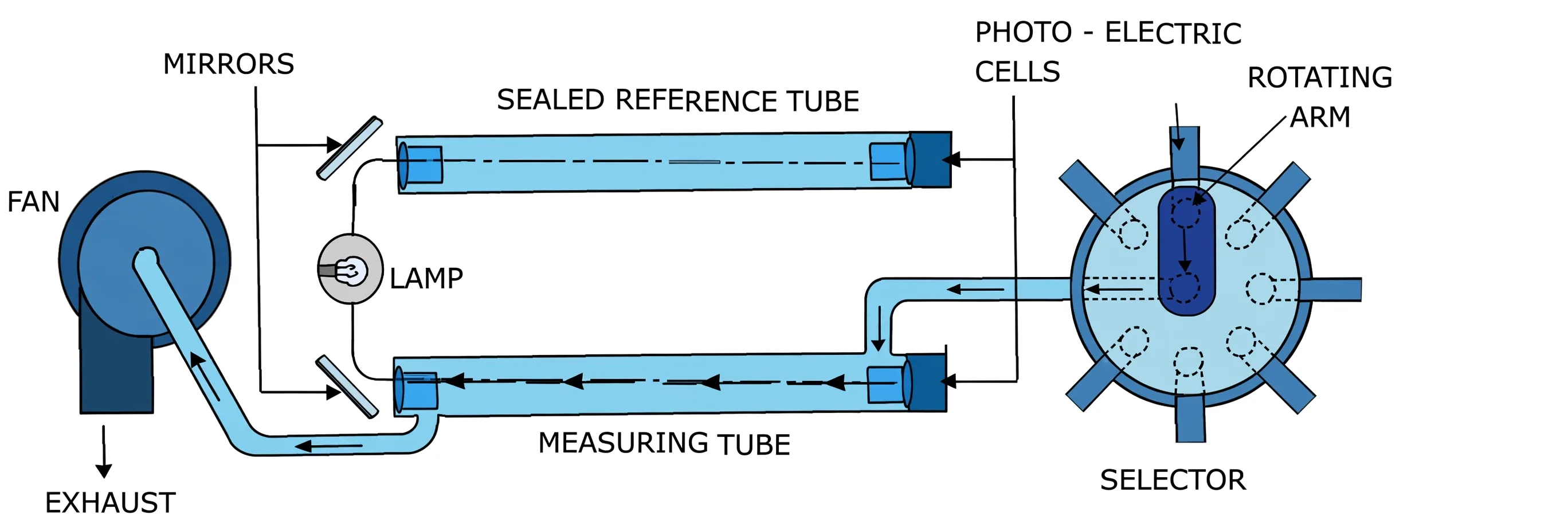
- The detector compares measuring tube against sealed reference on a rotating per-cylinder selector, freezing on the guilty unit.
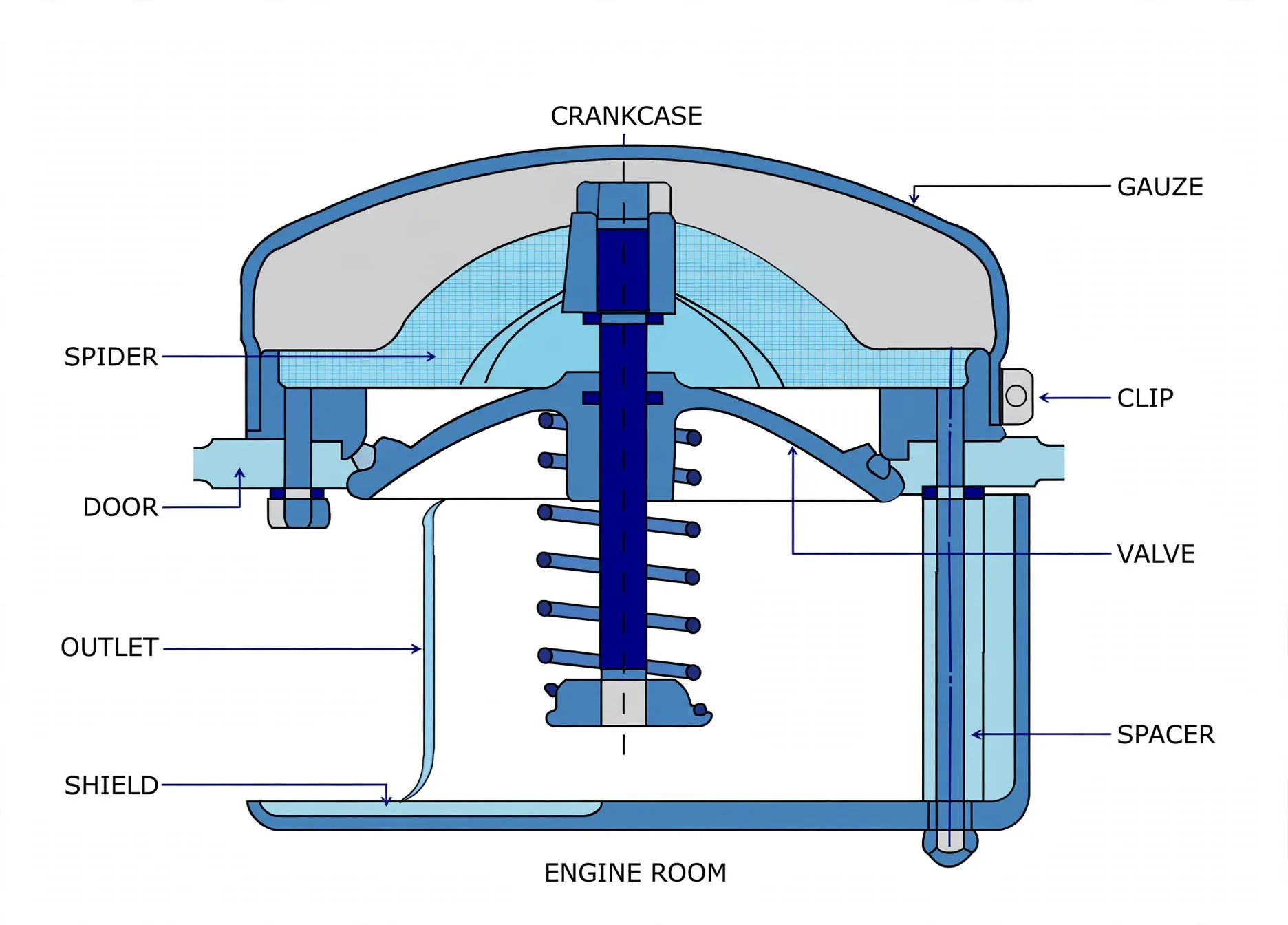
- Relief doors are light aluminium, spring-set, mesh-trapped, 120°-deflected, sized per cubic metre over 300 mm bore — and hand-tested on schedule.
1. From Splash to Shock Wave
Agitation throws coarse SAE-30 droplets that cannot burn fast enough to explode — until a hot spot (starved bearing, blow-by through worn liners and broken rings, chain-case faults) vaporises them into hydrogen/acetylene-rich gas that condenses on cool steel as white mist: 5–10 micron droplets, intimate with air, ignitable at 50 mg/litre. Recirculated onto the persisting hot spot it lights: the primary flame front races, evaporating fresh droplets ahead of itself in an accelerating cycle toward a 1.5–2 mile-per-second, ~30 atmosphere shock. Relief doors vent it — and the trailing sub-atmospheric wake inhales fresh air into burning mist for the secondary explosion that wrecks ships and kills engineers. Unrelieved (stuck, unsealed or undersized doors) the primary alone ruptures the casing; escaping mist can even travel to an unlagged turbocharger manifold and light there.
2. The Detector That Sees It Coming
Twin tubes, one lamp, two mirrors: sealed reference against live measuring tube on balanced photo-cells.
An extractor fan pulls each crankcase sample in turn through a rotating selector valve.
Mist dims the measuring beam and the balance breaks.
Alarm sounds well below explosive concentration.
The selector freezes on the guilty unit for immediate investigation.
Reset restores the cycle. Lenses, mirrors, sensitivity and zero earn scheduled cleaning and checks. Samples vent to atmosphere after.
3. The Door That Takes the Punch
Light aluminium disc (inertia beaten easily) on a wide sensitive spring, spindle-free against sticking, rubber-sealed gas-tight, aluminium deflector fanning discharge over 120° away from people, dome gauze flame-trap oil-wetted by nearby throws for heat-sinking, gauze area matching the opening. Area rules: per-cylinder doors above 300 mm bore, combined clear area per cubic metre of crankcase, minimum free area per valve — springs lifting at slight overpressure and reseating instantly, proved by hand-slap tests plus spring inspections and gauze washings.
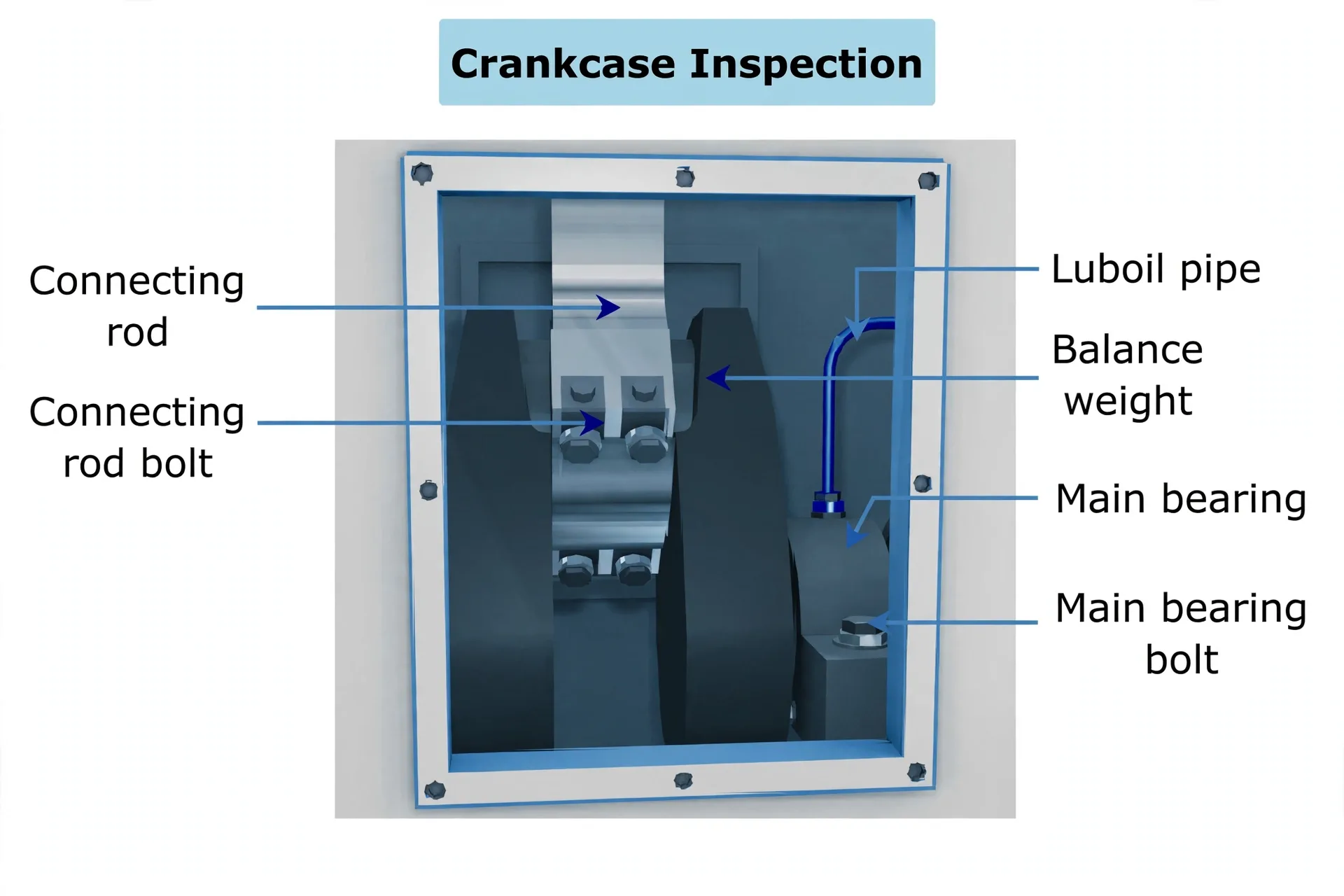
Inspection through the same doors checks pin and main shells, rod-bolt locks, balance-weight security, main-bolt locks, rod play, oil state and flow, wall carbon and microbes, H₂S smell, hot-spot discoloration — with relief springs finger-tested or spring-balanced on the way out.