
Engine Protections, Vibration Watch & Performance Curves
Alarm, slow-down, shut-down, interlock — plus the barred-speed band that keeps resonance from cracking steel.
Key Principles at a Glance 6 points
- Four layers escalate: alarm advises, slow-down sheds to dead-slow under 30 rpm, shut-down kills fuel, interlocks forbid the start.
- Memorise the trip band: LO ~1.5/1.0 bar, jackets ~88/95 °C, exhaust ~450 °C, scavenge ~65 °C, overspeed 107% MCR.
- UMS ships run 300+ days on surveillance — parameters alarmed, unarrested deviations shut down, no watchkeeper required in the space.
- Ten curves tie load to health: rpm, MIP, Pmax, Pcomp, scavenge, receiver and post-valve/post-turbo temperatures, air ratio, SFOC.
- Power follows revs cubed: 20% slower burns 45% power, a third slower saves three-quarters of the fuel — at the price of time.
- Vibration obeys the barred band: secondary shakes twice per turn, torsional twists, axial stretches — transit critical speeds fast, never hold inside.
1. Four Layers of Defence
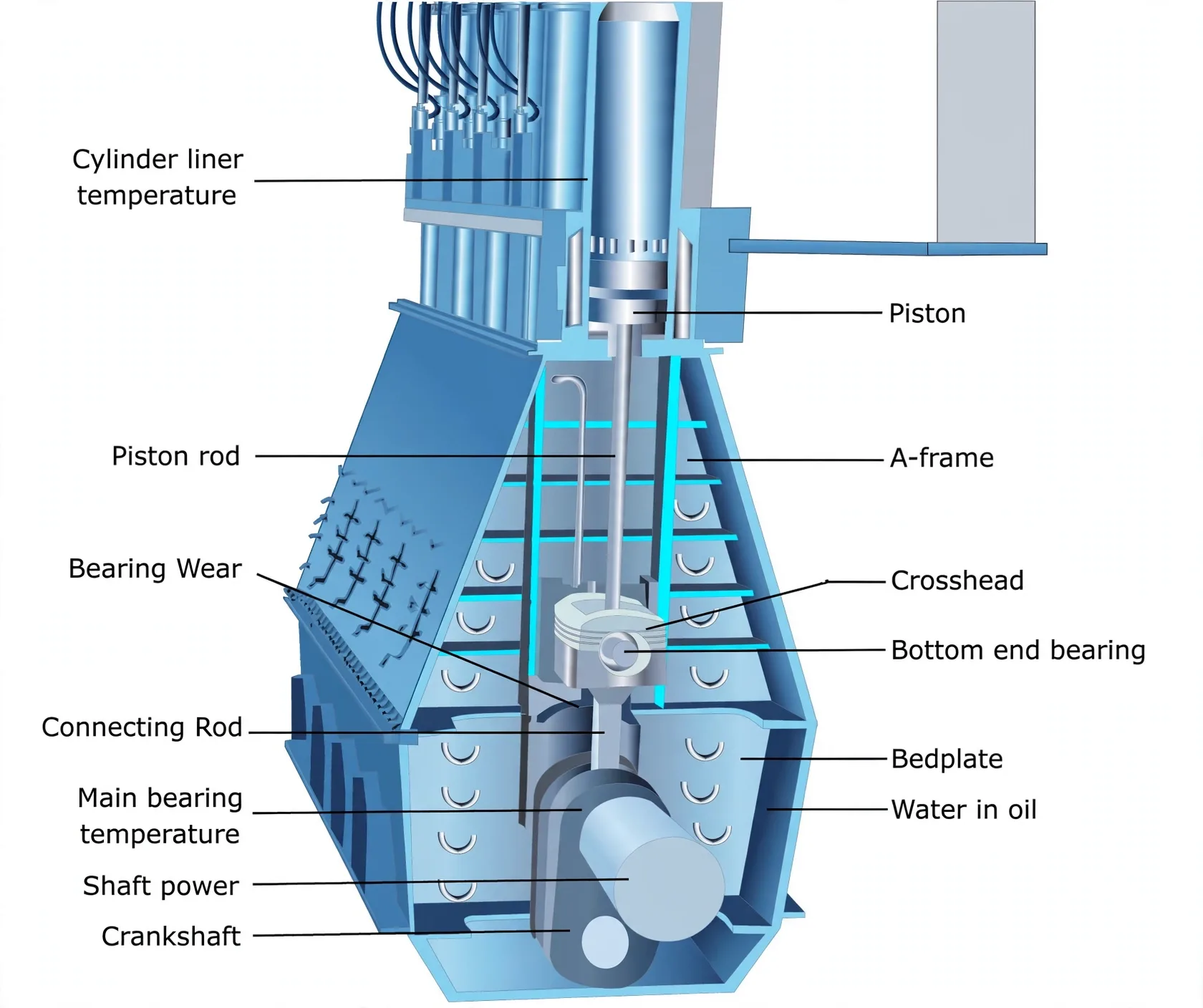
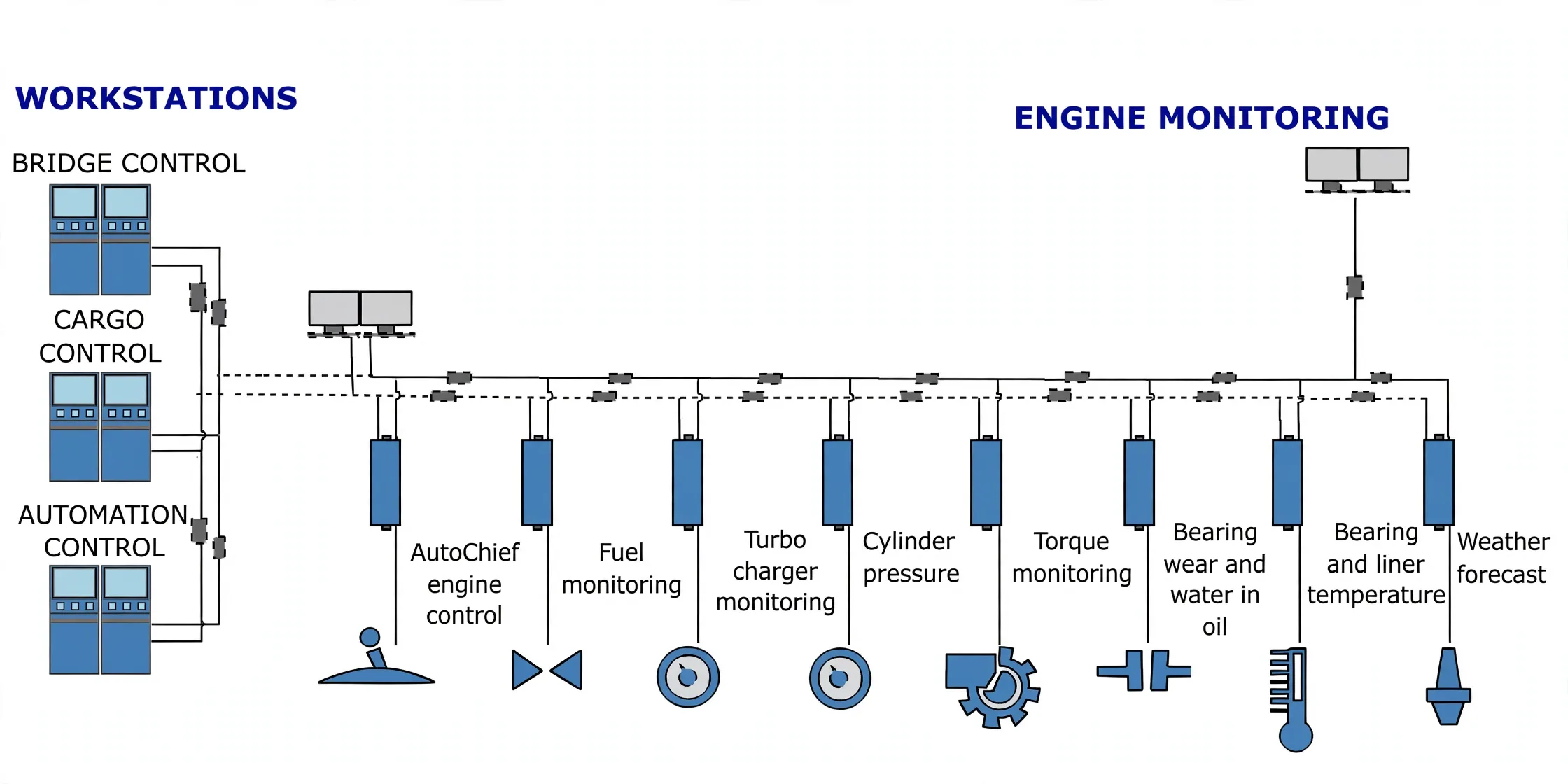
Unmanned spaces running 300+ days demand protection that works unattended: alarms announce deviation, slow-down drags the engine under 30 rpm when correction fails, shut-down cuts fuel against damaging excursions, interlocks refuse the start unless turning gear is out, blowers proven and pumps running. Surveillance watches every parameter with visual and audible alarms; ignored warnings escalate automatically.
2. Trip Values to Quote
| Slow-down (dead-slow) | Shut-down (fuel cut) |
|---|---|
| LO pressure → 1.5 bar; camshaft → 2 bar | LO inlet → below 1 bar; camshaft → below 1.5 bar |
| Piston coolant stopped; OMD / bearing sensors live | Cylinder LO flow lost |
| LO inlet above 60 °C; piston cooling above 75 °C | Jacket above 95 °C or pressure below 0.1 bar |
| Jacket above 88 °C; exhaust above 450 °C | Thrust block above 90 °C; turbo LO below 0.8 bar |
| Scavenge above 65 °C; thrust above 75 °C | Overspeed at 107% MCR |
| Cylinder LO low flow; control air below 5.5 bar |
3. Curves That Price Every Fault
Shop-trial curves plot each parameter against load. Sea service replays them.
| Curve | What it judges |
|---|---|
| RPM vs load | Overload — rated power below rated revs convicts it |
| MIP vs load | Must track power, or instruments lie |
| Pmax | Injection and timing |
| Pcomp | Rings, pistons, valves |
| Scavenge pressure | The turbocharger path |
| Receiver temperature | Its inlet enthalpy |
| Post-valve temperature | Combustion quality — afterburning runs hot |
| Post-turbo temperature | Energy extraction — fouled wheels show here |
| Air ratio | For designers |
| SFOC | The final bill |
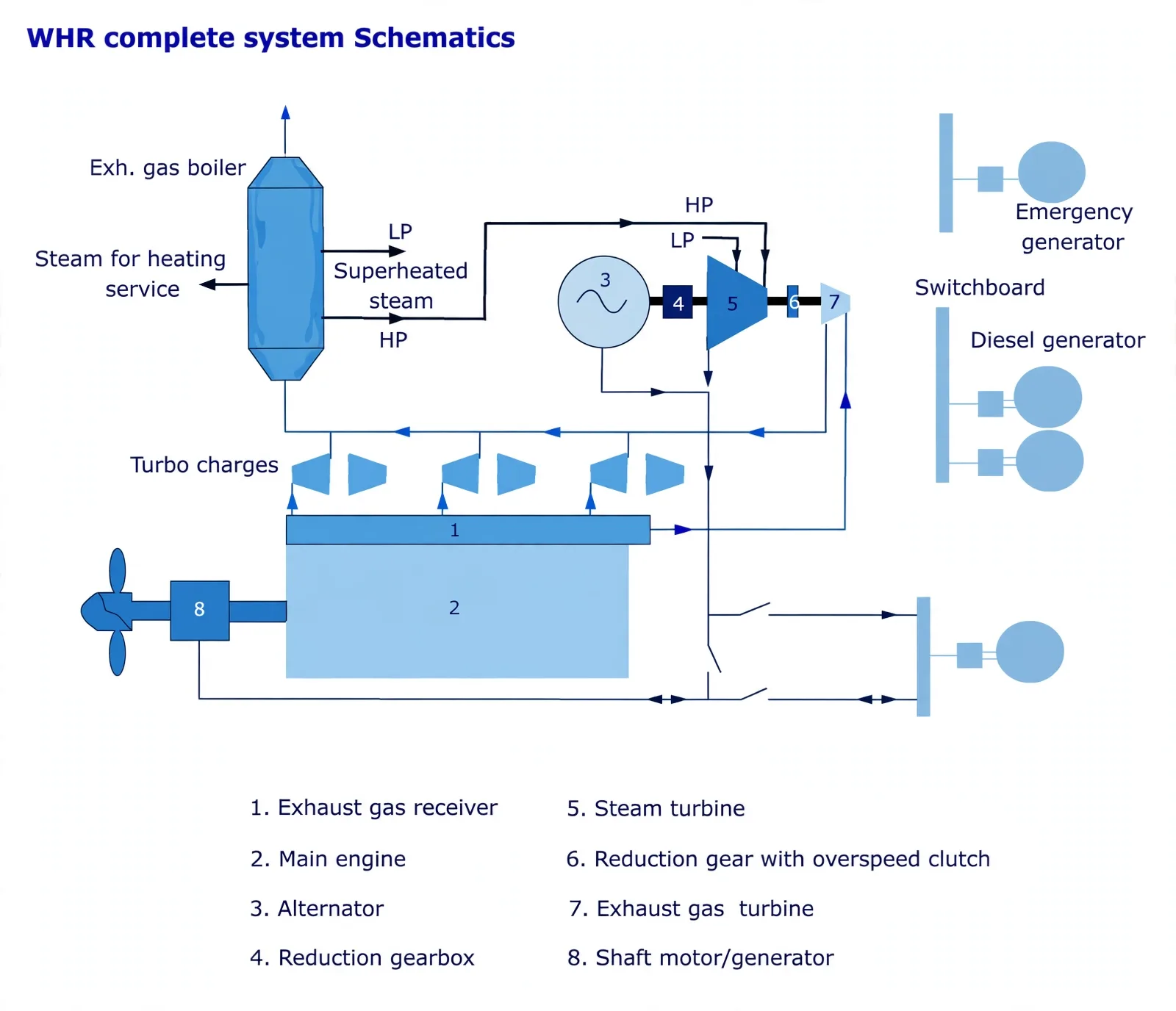
Slow-steaming economics: power follows revs cubed — 20% slower needs 45% power, a third slower saves ~75% fuel for a longer voyage. The economic rating is the SFOC minimum: an engine rated 15,000 bhp at 104 rpm but peaking at 98 burns extra while crawling — hull, propeller or prime mover at fault, and the trial curves say which. Waste-heat recovery stretches the same fuel further wherever exhaust mass flow pays for it.
4. Vibration Watch — Hear It, Feel It, Bar It
Idea in one line: the curves price steady faults — vibration prices moving ones, and the barred-speed plate on the telegraph is the cheapest protection aboard.
Secondary inertia forces shake every reciprocating engine twice per revolution; firing pulses twist the shaft (torsional) and stretch it endwise (axial). At a critical speed the excitation meets a natural frequency and resonates — amplitude climbs until steel cracks. The maker bars that band on the tachometer: transit it quickly on the way up and down, never hold inside it, log every transit:
New vibration at steady revs is a protection event in slow motion: check deflections, foundation bolts and tie-rod tension before it becomes a trip — the failure table in Crankshaft Deflection, Slip & Failure Prevention §5 names where it ends.