Shaft Seals & Packing — Wiper Rings, Mechanical & Labyrinth Seals
Where seals sit on board, how wiper rings control oil on the piston rod, and how clearance stages seal a turbocharger without contact.
Key Principles at a Glance 5 points
- A shaft seal blocks the annular clearance where a moving shaft pierces a stationary wall — pump glands, valve stems and the stern tube all need one.
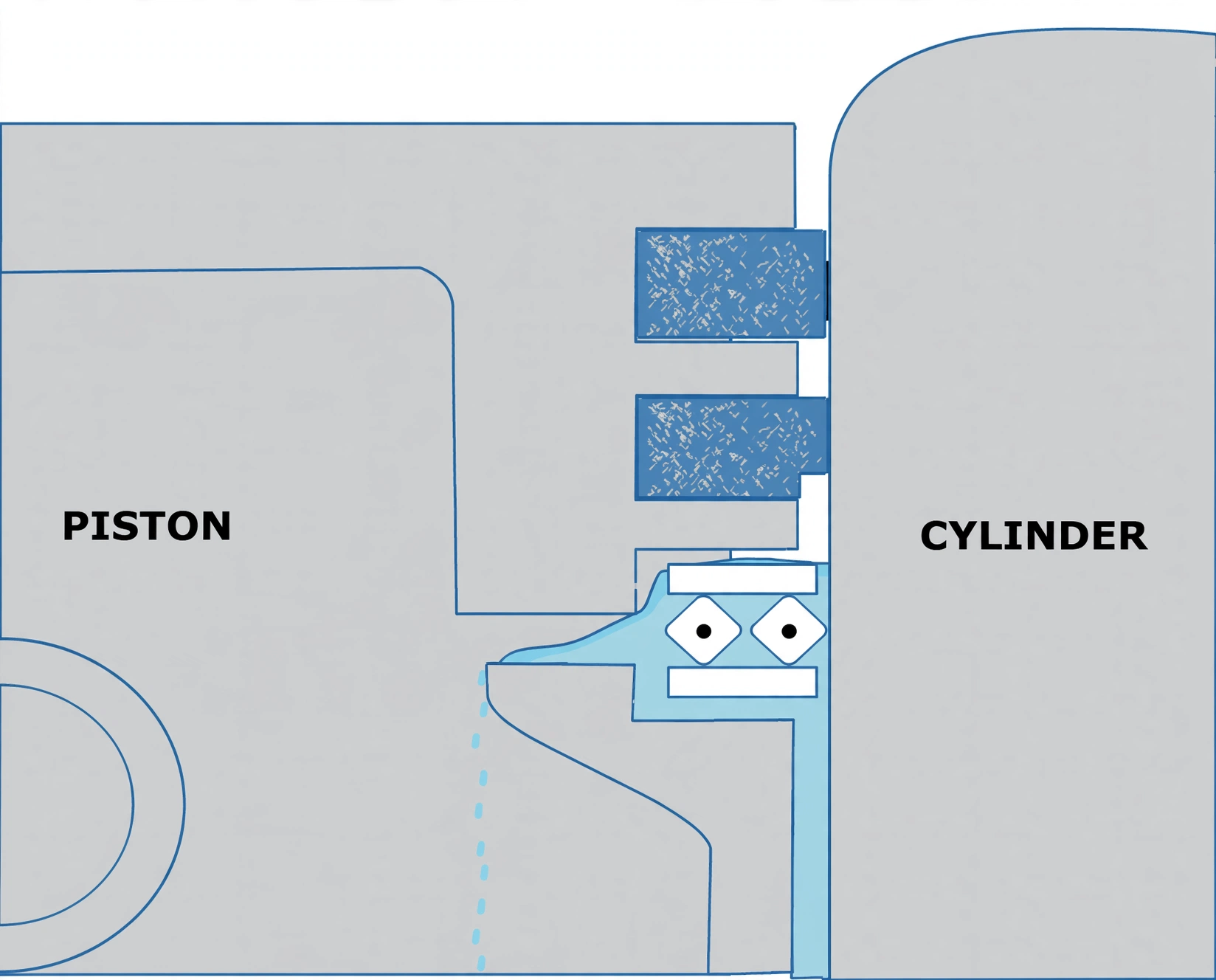
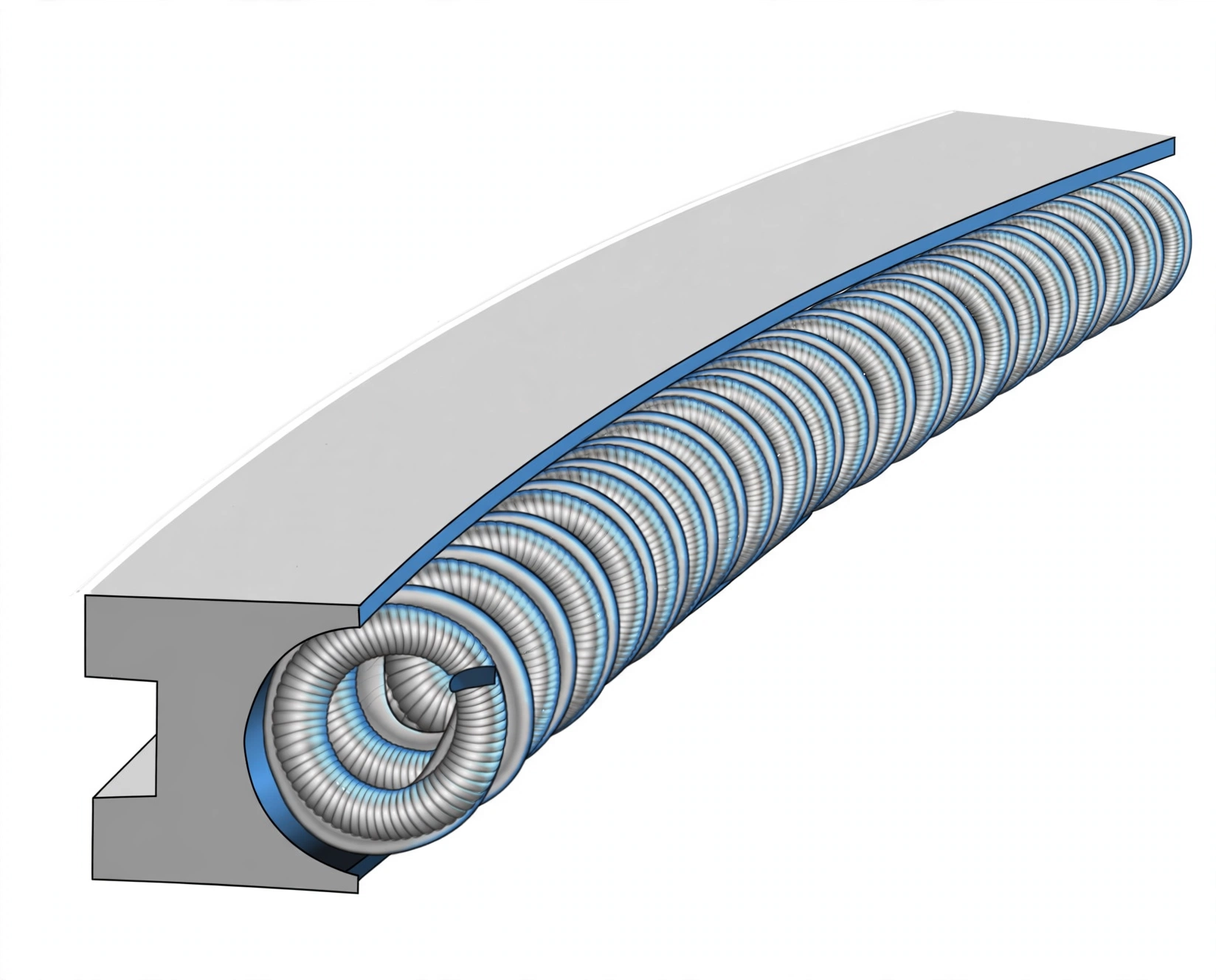
- Oil control / wiper rings are garter-spring scraper rings on the piston rod: they wipe oil back to the crankcase and keep cylinder dirt out.
- Static seal = no relative motion; Dynamic seal = parts move against each other — the single most-asked viva distinction.
- Mechanical seals are the maintenance-free standard for glanded pumps: near-zero leakage, 1–3 years life, but hate dirty water and misalignment.
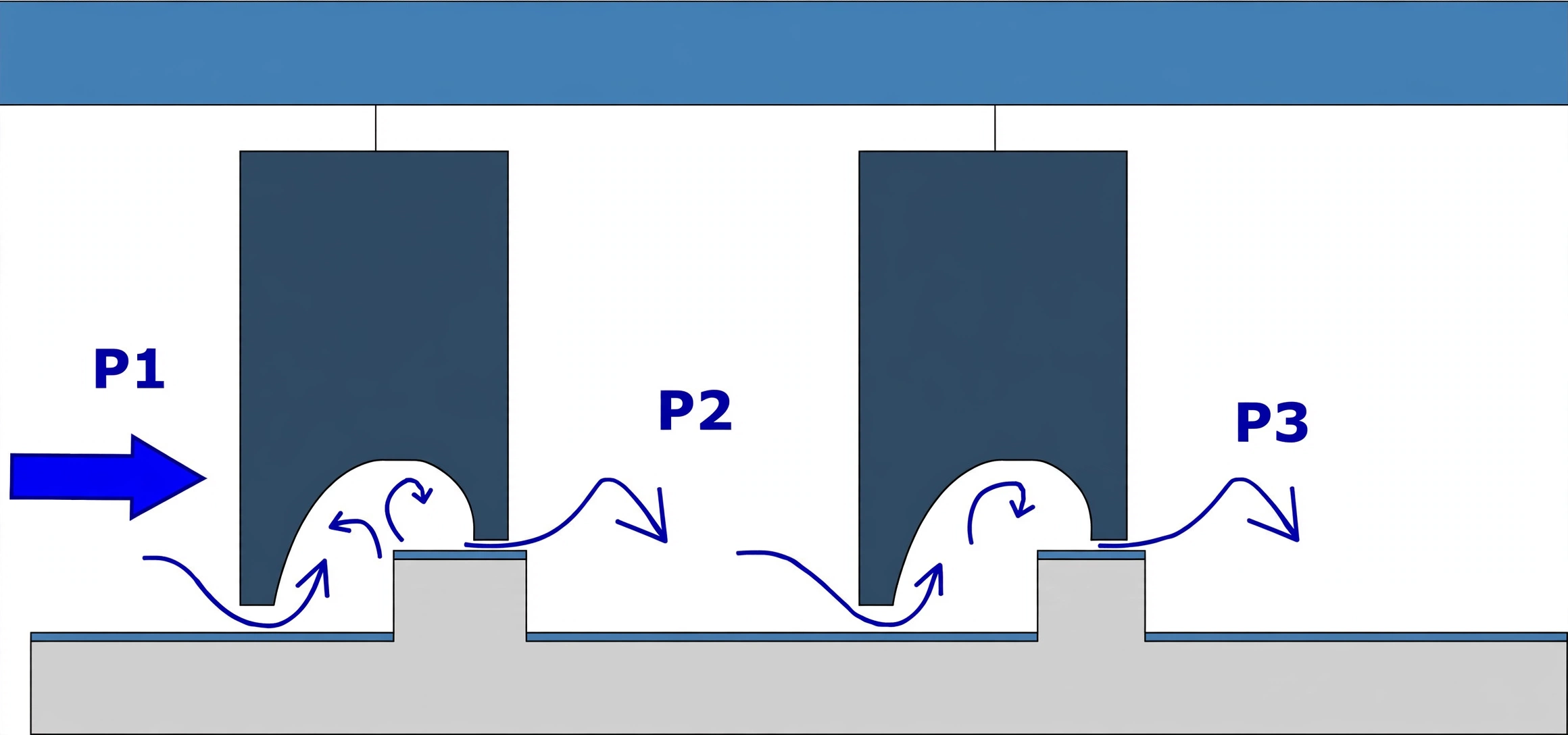
- Labyrinth seals do not touch at all — gas loses pressure in stages across fine clearances and expansion chambers, so only a trace can leak through.
1. The Big Idea in 30 Seconds
Idea in one line: wherever a moving shaft pierces a stationary wall, pressure pushes fluid through the gap — a seal is whatever blocks that gap for the duty involved.
Two parts, two jobs: the gland is the machined groove or housing that locates the sealing element; the sealing element itself does the blocking — as compressible packing rings, as a pair of loaded seal faces, or as a series of throttling clearances.
Pump glands
Between pump casing and drive-motor shaft — the commonest seal you will overhaul.
Valve stems
The gland under the handwheel on a pipeline valve — same principle, smaller duty.
Stern tube
The most sophisticated one: a water- or oil-lubricated hydraulic seal keeping seawater out of the ship.
2. Oil Control & Wiper Rings
Idea in one line: the piston rod shuttles oil upward and dirt downward — a spring-loaded scraper edge strips the film off on every stroke.
In reciprocating compressors and crosshead engines the rod passes between two spaces that must not mix: the crankcase below and the cylinder above. Oil carried up contaminates the compressed gas; combustion products and cylinder lubricant draining down degrade the crankcase oil and attack bearings and running gear.
| Feature | Why it is that way |
|---|---|
| Segmental rings, radially or tangentially cut | Segments close down on the rod as they wear — a solid ring would go slack and stop wiping |
| Garter spring around the outside | Holds the scraper edge on the rod with enough bearing load to break the oil film's surface tension |
| Turn-back type | Throws a large oil volume straight back along the rod |
| Drainage-passage type | Wiped oil drains through passages to an annular space and back to the crankcase |
| Normally 2–3 wipers with a pressure packing | Each stage strips what the last one missed — one ring alone always weeps |
3. Seven Seal Terms Examiners Love (Do Not Mix Them)
Idea in one line: examiners test whether you separate the housing from the seal, and the seal that moves from the one that does not.
| Term | Exact meaning | Tell it apart by |
|---|---|---|
| Static seal | Seals surfaces with no relative motion | Casing and cover joints — nothing slides |
| Dynamic seal | Seals surfaces with relative motion | Shaft rotating or sliding in its housing |
| Gland | The groove or housing the seal sits in | It is the seat, not the seal itself |
| Wiper / Scraper | Ring in the cylinder head that strips oil and excludes dirt | It cleans a moving rod; a plain seal only blocks |
| Bearing / Wear ring | Soft-metal or plastic ring stopping hard surfaces touching | Deliberately softer — it wears so the shaft does not |
| Elastomer | Rubber-like material: large deformation, rapid recovery | Used where the seal must flex — bellows, O-rings |
| Durometer | Hardness scale for elastomers | Lower reading = softer compound |
"Static — no motion. Dynamic — with motion. Gland — the housing." Say that first, then add the rest. Examiners tick the first sentence.
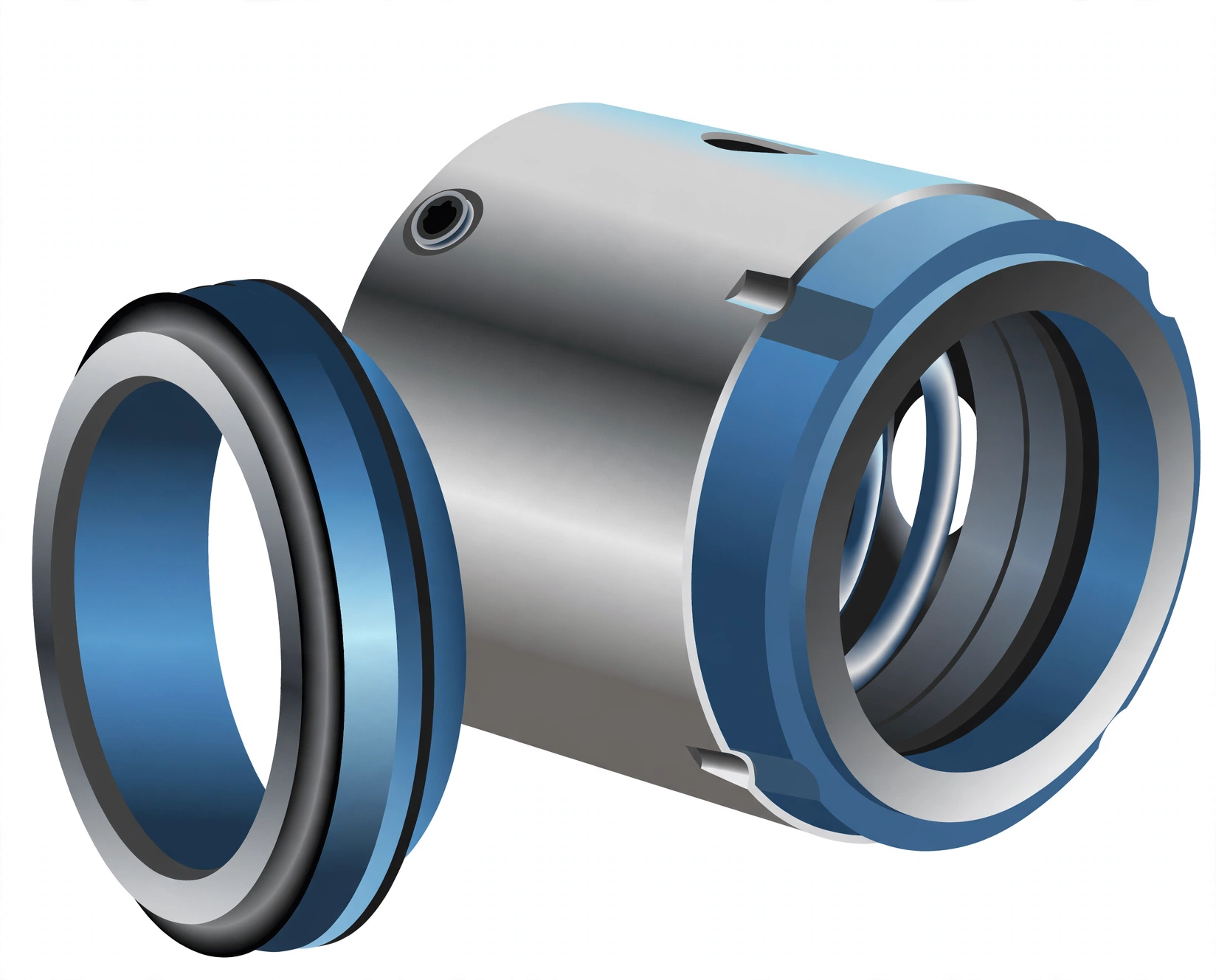
4. Mechanical Seals — the Maintenance-Free Standard
Idea in one line: two flat faces pressed together leak almost nothing — and a spring follows the wear so nobody ever adjusts them.
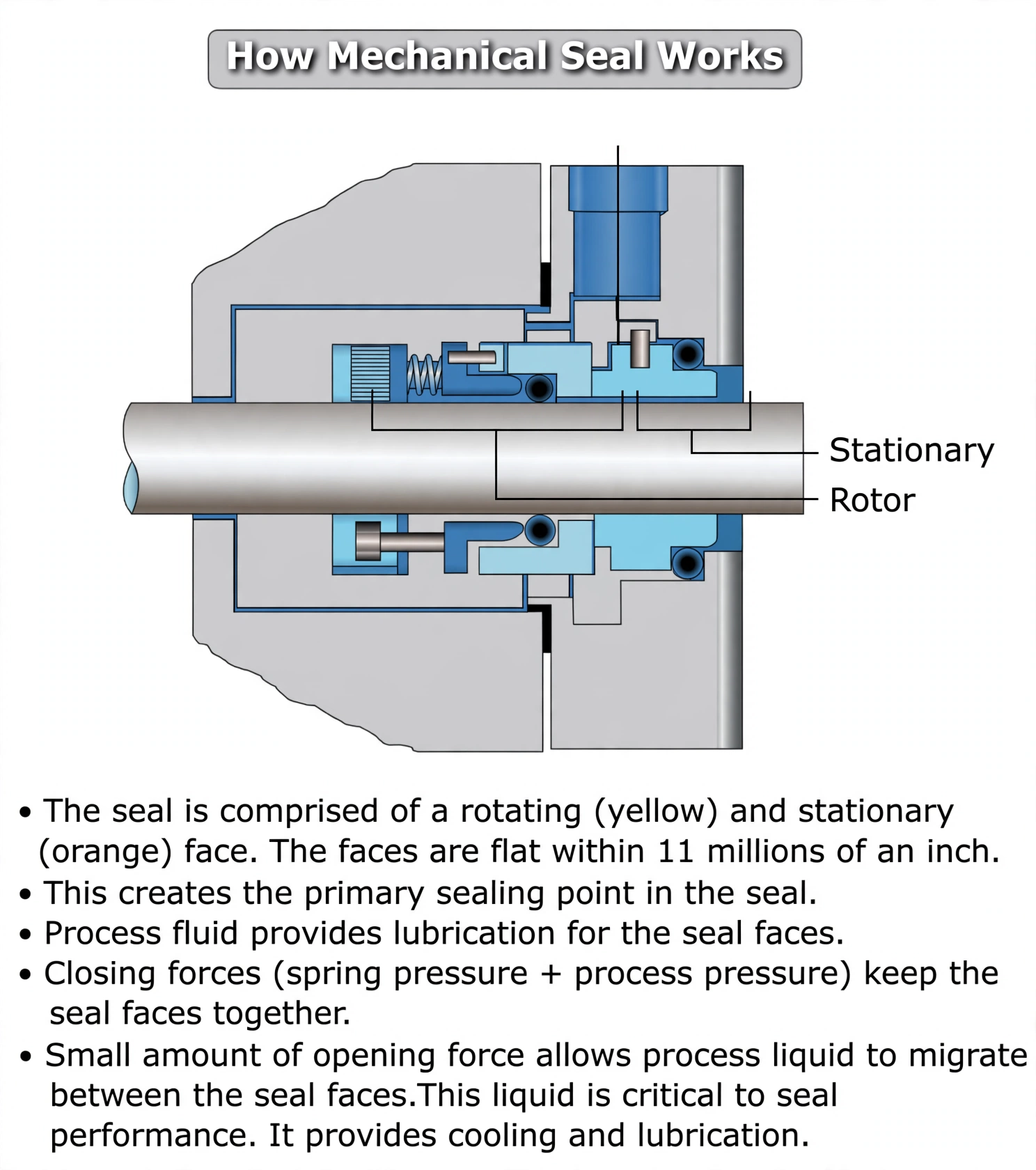
The maintenance-free mechanical seal has virtually become standard on direct-coupled glanded pumps: no visible leakage, no routine attention, service life 1–2 years (max 3).
| Feature to quote | What it does |
|---|---|
| Elastomeric bellows + spring | Flexible shaft attachment that auto-compensates as the seat wears — no gland adjustment ever |
| Hard-on-soft faces (ceramic or hardened metal vs carbon) | Slippery, low-friction pair riding on a thin liquid film — lower drag, better pump efficiency, shaft never worn |
| Bronze or stainless shaft sleeve | The seal rides on the sleeve, so it never chews the shaft itself |
Why it beats packing: packing needs a visible drip for its own lubrication; a mechanical seal does not. Loaded faces stay closed at pressures and speeds where packing would blow out or overheat.
| Where it loses | Mechanism | Defence |
|---|---|---|
| Misalignment | Shaft deflection opens the loaded faces — leak | Align to makers' limits; less tolerant than packing |
| Dirty liquid | Abrasives score the sliding pair | Cyclone separator on dirty duties; extra flush and quench piping |
| Bad water chemistry | Sediments, additives and overheating shorten life severely | Consult the seal maker for a special design — favourite examiner follow-up |
5. Labyrinth Seals — Sealing Without Touching
Idea in one line: where rubbing is forbidden, make the leak path so tortuous that pressure dies in stages before it escapes.
Used on turbochargers and auxiliary steam turbines. Each stage is a fine clearance followed by an expansion chamber: gas accelerates through the clearance so static pressure falls, then the jet breaks into turbulence and eddies in the chamber, and that kinetic energy dissipates instead of converting back into pressure. Stage after stage, each one destroys part of the head — so almost nothing remains to leak out.
Exam closer — three seals, one line each:
- Packing: cheap, needs a drip, wears the shaft.
- Mechanical: zero-leak, fit-and-forget, hates dirt.
- Labyrinth: no contact, for high-speed gas machines, always leaks a little by design.