
MARPOL Annex III — Harmful Substances in Packaged Form
The IMDG Code, nine dangerous goods classes, UN packaging standards, marine pollutant markings, stowage segregation, and hold bilge isolation.
Key Principles at a Glance 6 points
- MARPOL Annex III regulates harmful substances carried by sea in packaged forms, including freight containers, portable tanks, intermediate bulk containers (IBCs), and road/rail tank wagons.
- A "harmful substance" under Annex III is any chemical identified as a Marine Pollutant in the International Maritime Dangerous Goods (IMDG) Code, which is mandatory under SOLAS Chapter VII.
- Packaging must conform to UN performance tests (drop, hydraulic pressure, stacking, leakproofness) and markings must remain identifiable after at least three months of immersion in the sea.
- Dangerous goods are classified into nine hazard classes and three Packing Groups: Group I (great danger), Group II (medium danger), and Group III (minor danger).
- Segregation tables enforce spatial separation between incompatible cargoes: Away from (3 m), Separated from (bulkhead / 6 m), Separated by complete compartment, or Separated longitudinally.
- Cargo holds carrying packaged dangerous goods must have isolated bilge systems to prevent toxic or flammable washings from entering engine room bilges or contaminating the 15 ppm OWS.
1. Annex III Scope & UN Specification Packaging Engineering
MARPOL Annex III: Regulations for the Prevention of Pollution by Harmful Substances Carried by Sea in Packaged Form provides the statutory link between marine environmental protection and the IMDG Code (made mandatory under SOLAS Chapter VII). Unlike bulk liquids governed by Annexes I and II, Annex III controls discrete containment units that can rupture, leak, or be lost overboard during heavy weather.
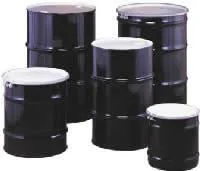
Annex III applies universally to all ships carrying packaged harmful substances. Under Regulation 1, packaged form is defined as any containment vessel specified in the IMDG Code, ranging from 25-litre jerricans and 200-litre steel drums to 1,000-litre Intermediate Bulk Containers (IBCs), portable tanks, and multimodal freight containers. It explicitly excludes ship's operational stores and emergency equipment.
Under Regulation 2 (Packing), packages must be of adequate strength to withstand the normal shocks, accelerations, and vibrations of ocean transport while completely preventing leakage. Certified packaging carries an indelible UN Specification Code embossed or printed on the body:

2. The Nine IMDG Classes & Marine Pollutant Markings
Every dangerous good carried under Annex III is categorized under the nine hazard classes of the IMDG Code according to its predominant physical, chemical, or biological threat. Goods are identified by their four-digit UN Number and official Proper Shipping Name (PSN) — trade names alone are legally void on transport documents:
Class 1: Explosives
Substances and articles with mass explosion risk, projection hazards, or pyrotechnic reactions. Divided into Divisions 1.1 to 1.6 and Compatibility Groups A to S.
Class 2: Gases
Compressed, liquefied, or dissolved gases. Division 2.1 (Flammable Gases, e.g. propane), Division 2.2 (Non-flammable, non-toxic, e.g. nitrogen), and Division 2.3 (Toxic Gases, e.g. chlorine).
Class 3: Flammable Liquids
Liquids having a closed-cup flashpoint ≤ 60°C. Includes fuels, solvents, paints, and alcohols. Further categorized by Packing Group based on boiling point and flashpoint.
Class 4: Flammable Solids
Division 4.1 (Flammable solids, self-reactive substances), Division 4.2 (Substances liable to spontaneous combustion, e.g. white phosphorus), and Division 4.3 (Water-reactive emitting flammable gases, e.g. calcium carbide).
Class 5: Oxidizers & Peroxides
Division 5.1 (Oxidizing substances that yield oxygen to stimulate combustion, e.g. ammonium nitrate) and Division 5.2 (Organic peroxides, thermally unstable and subject to explosive decomposition).
Class 6: Toxic & Infectious
Division 6.1 (Toxic poisons liable to cause death or severe injury via inhalation, ingestion, or skin contact) and Division 6.2 (Infectious substances containing viable microorganisms or pathogens).
Class 7: Radioactive Material
Materials containing radionuclides with activity concentrations exceeding statutory thresholds. Categorized into White-I, Yellow-II, and Yellow-III based on radiation surface dose rates.
Class 8: Corrosives
Substances causing full-thickness destruction of intact human skin tissue or severe corrosion rates on steel and aluminium surfaces (e.g. hydrochloric acid, sodium hydroxide).
Class 9: Miscellaneous
Substances presenting hazards during transport not covered by other classes. Includes lithium batteries, genetically modified organisms, elevated temperature liquids, and environmentally hazardous substances.
A package containing an environmentally harmful substance must carry both its primary Class diamond label and the statutory Marine Pollutant Mark:
3. Container Hold Segregation & Bilge System Isolation
Incompatible dangerous goods must never be stowed together where a collision, rough seas, or container puncture could cause cross-contamination, thermal runaways, toxic gas release, or explosions. The IMDG Code enforces four graduated segregation levels:
Under SOLAS II-2 and MARPOL Annex III, cargo holds designated for dangerous goods carriage must be equipped with positive isolation blanks or spectacle flanges separating hold bilge wells from the machinery space bilge main. Pumping dangerous chemical leaks through the engine room oily water separator (OWS) risks chemical explosion, hydrocarbon sensor blinding, and catastrophic illegal discharge.
4. Documentation: The Dangerous Goods Manifest & Port State Audit
A vessel cannot legally unmoor without carrying a complete Dangerous Goods Manifest and an accompanying Detailed Stowage Plan specifying the precise location of all packaged harmful substances on board. Under Regulation 4, shore representatives and port authorities must receive verified copies prior to departure.
Shipper's Declaration of Dangerous Goods
A legally binding declaration signed by the cargo consignor certifying that the chemical goods are correctly packaged, marked, labelled, and in fit condition for ocean transit without risking the vessel or marine environment.
Dangerous Goods Manifest (SOLAS VII / MARPOL III)
A statutory master register detailing: Container Number, Cell Stowage Location (Bay-Row-Tier), UN Number, Proper Shipping Name, Primary Class, Packing Group, Net Explosive Mass (if Class 1), and explicit "MARINE POLLUTANT" designation.
EmS Guide & Medical First Aid Guide (MFAG)
The Emergency Response Procedures for Ships Carrying Dangerous Goods (EmS). For each UN Number on board, the manifest cross-references an EmS Fire Schedule (e.g. F-E) and EmS Spill Schedule (e.g. S-D) for tactical crew response.
Port State Inspection & "Clear Grounds" Triggers:
During Port State Control inspections, officers audit the dangerous goods documentation and physical stowage for compliance. An audit follows an established verification pathway: