Diesel Engine Basics — Terms, Strokes & Timing
Stroke, swept volume, compression ratio — then how four strokes collapse into two.
Key Principles at a Glance 5 points
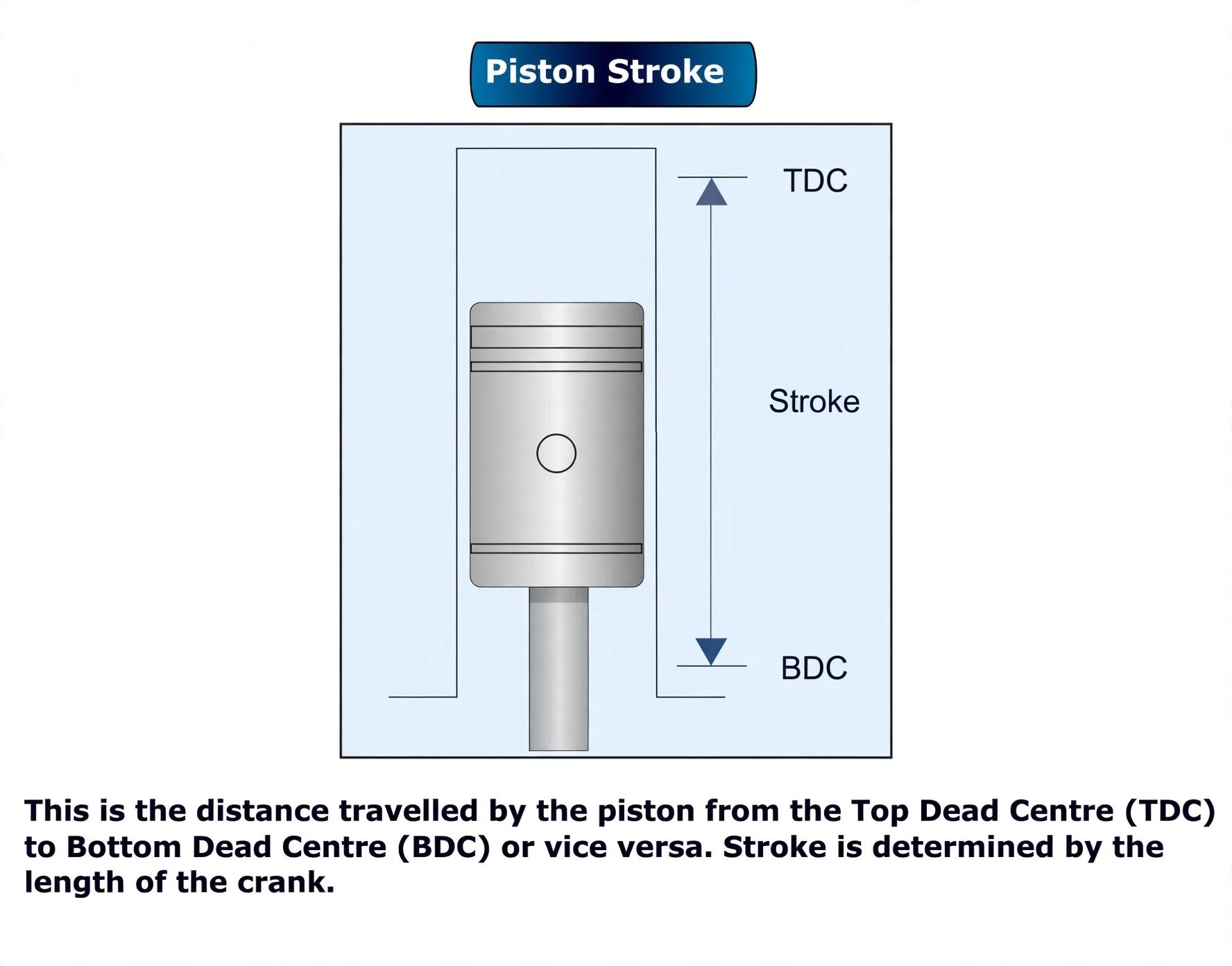
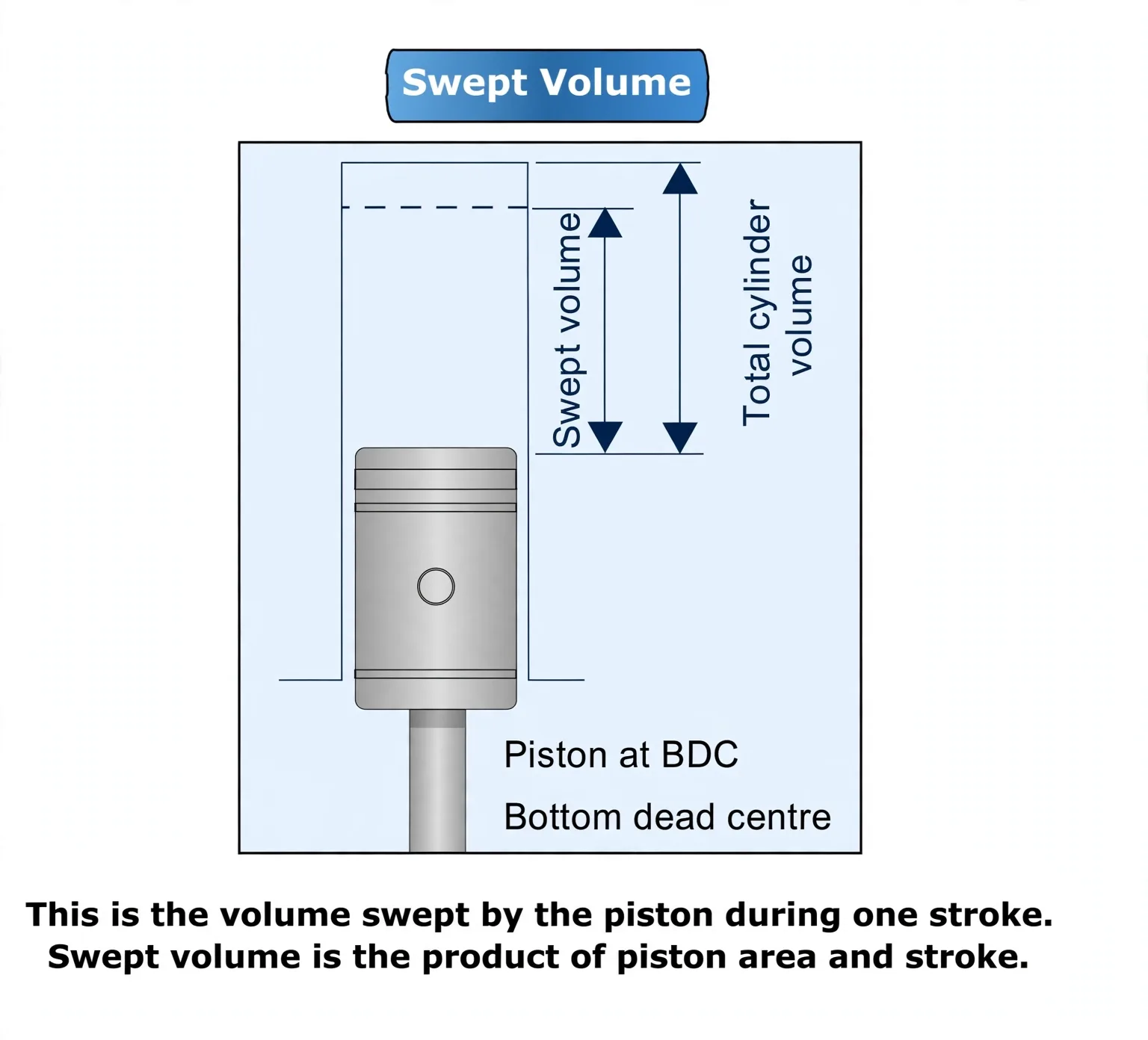
- Stroke is crank-length in metal: TDC-to-BDC travel fixed by crank throw; swept volume is piston area times that stroke.
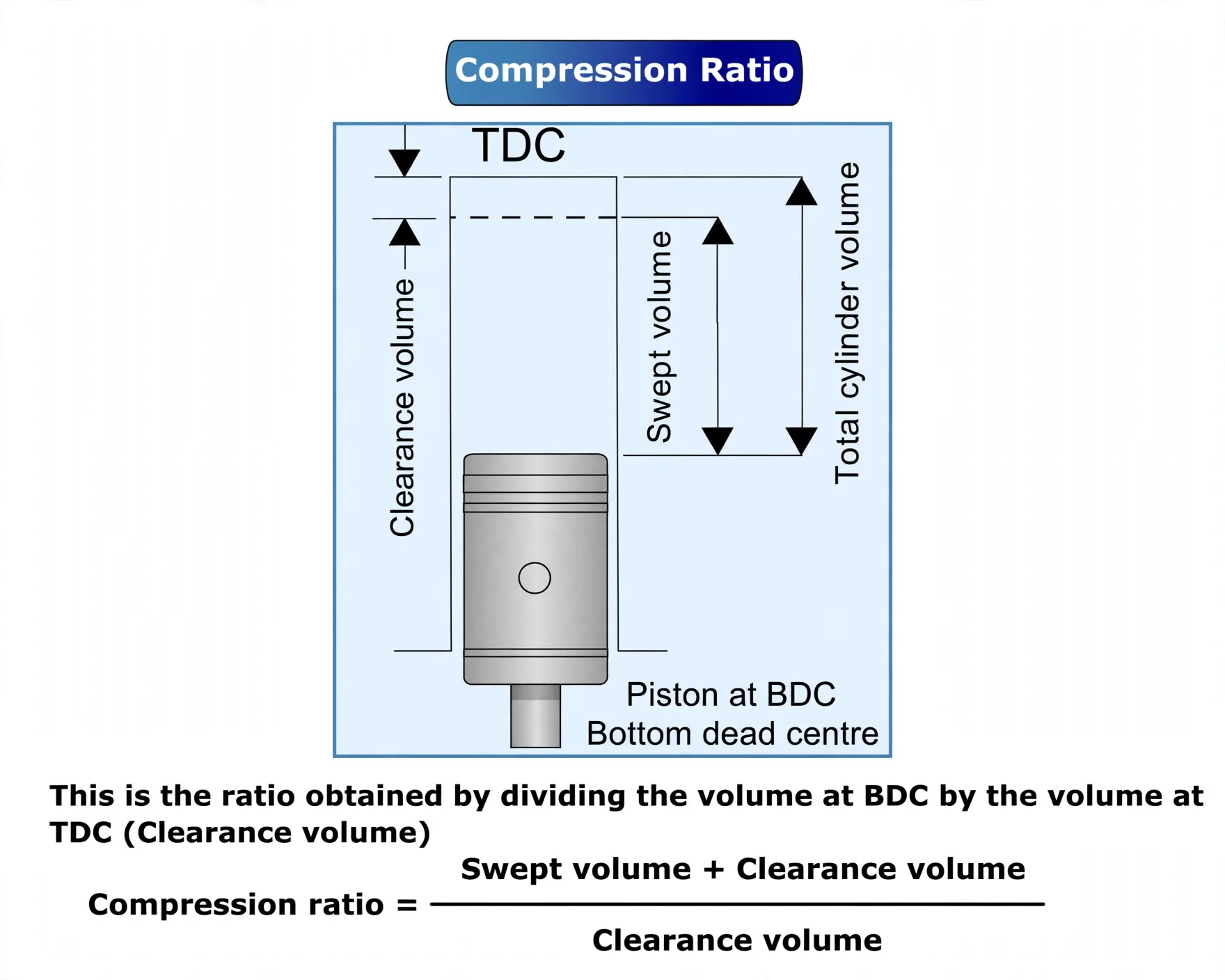
- Compression ratio is total volume over clearance volume — the single number governing diesel ignition.
- Four strokes separate every event: suction, compression, power, exhaust across two crank revolutions with valves in sequence.
- Two strokes merge events into one revolution — ports and a blower replace two valve strokes, and the camshaft runs at crank speed.
- A timing diagram is the cycle drawn as crank angles: read every opening, closing, injection and blow-down off TDC and BDC.
1. The Geometry — Stroke, Volumes, Ratio
Every diesel dimension starts at the crank. Three volumes build on one another:
Stroke
TDC-to-BDC travel, set by crank length.
Swept volume
Piston area times stroke.
Clearance volume
What remains above the piston at TDC.
Compression ratio — total over clearance — decides whether compression heat alone can fire the fuel.
2. Four Strokes — One Event at a Time
Two crank revolutions, four dedicated strokes, valves in strict sequence: the piston draws charge down (suction), squeezes it up (compression), takes the firing push down (power), and sweeps the burnt gas out up (exhaust) — drawing in, compressing, firing and expelling, each with its own stroke and its own valve timing.
3. Two Strokes — Everything Doubled Up
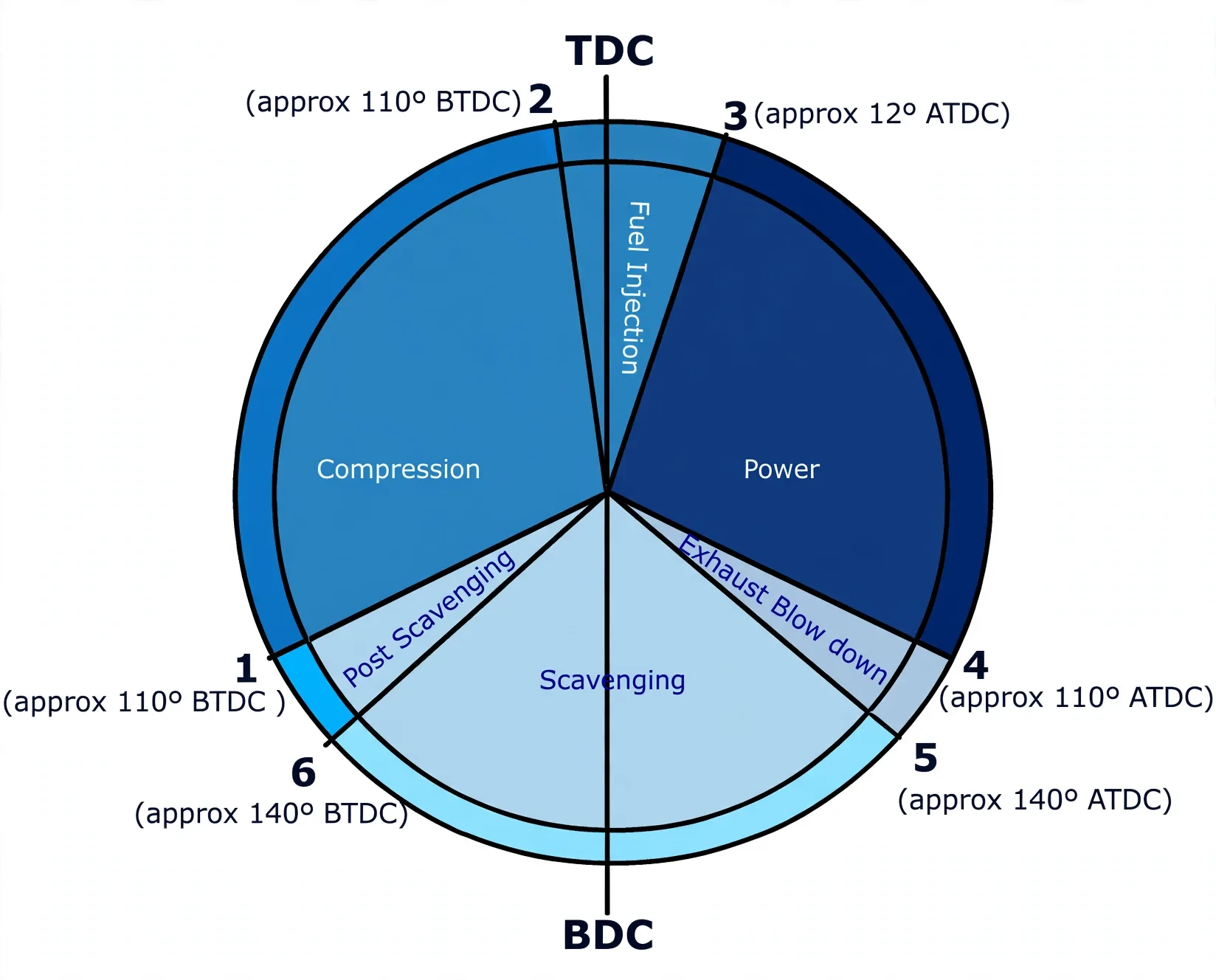
One revolution must do all four jobs, so events overlap: fuel fires every revolution, ports uncovered by the piston replace valve strokes for gas exchange, and a blower forces fresh air in while driving exhaust out — without it the cylinder would breathe its own burnt gas. Because every revolution fires, the camshaft runs at full crank speed (not half, as on four-strokes).
4. Reading the Timing Wheel
The timing diagram wraps the whole cycle onto crank degrees around TDC and BDC: compression climbing toward the top, fuel injection straddling TDC, power expanding down, exhaust blow-down, then the scavenge band sweeping the cylinder clean near the bottom before compression restarts. Learn to point at any event and name its crank angle — every timing question in the orals starts exactly there.