
SOLAS Chapter VII — Carriage of Dangerous Goods & IMDG Code
Statutory structure of Parts A–D, IMDG Code two-volume framework, 9 hazard classes, UN package testing, and container segregation geometry.
Key Principles at a Glance 6 points
- SOLAS Chapter VII governs all dangerous goods carriage, legally structured into four distinct parts: Part A (Packaged Goods / IMDG Code), Part B (Bulk Liquid Chemicals / IBC Code), Part C (Bulk Liquefied Gases / IGC Code), and Part D (Irradiated Nuclear Fuel / INF Code).
- The IMDG Code became mandatory in international law on 1 January 2004 under SOLAS Regulation VII/3; Volume 1 governs packaging, tank construction, and consignment, while Volume 2 contains the 18-column Dangerous Goods List (DGL).
- Dangerous goods are divided into 9 statutory classes; substances with high, medium, or minor danger are assigned Packing Groups I, II, or III respectively, dictating rigorous drop, leakproofness, and hydrostatic test pressures.
- All packages, intermediate bulk containers (IBCs), and portable tanks must carry certified UN specification markings and diamond hazard placards engineered to withstand at least 3 months continuous immersion in seawater.
- Segregation between incompatible dangerous goods follows a four-tier statutory distance matrix: "Away from" (3 m), "Separated from" (6 m / 1 bulkhead), "Separated by a complete compartment", and "Separated longitudinally by an intervening compartment".
- Port State Control officers possess statutory powers under Regulation 8 to detain any vessel where "clear grounds" demonstrate that crew cannot execute IMDG Emergency Schedules (EmS) or Medical First Aid Guide (MFAG) protocols.
1. Chapter VII Statutory Architecture & The Four Mandatory Codes
Statutory Scope & Legal Framework
SOLAS Chapter VII provides the overarching international legal convention for transporting dangerous materials across the high seas. While MARPOL Annex III regulates packaged harmful substances strictly to prevent ocean pollution, SOLAS Chapter VII regulates dangerous goods to preserve vessel seaworthiness, fire safety, and human life.
The chapter is structurally divided into four parts, each referencing an exhaustive, mandatory technical safety code that governs ship design, tank containment barriers, and cargo operational handling.
Comparison of the Four Statutory Codes
| SOLAS VII Part | Governing Code | Vessel Structural / Tank Requirements | Statutory Certification Issued |
|---|---|---|---|
| Part A (Packaged Goods) | IMDG Code (Vols 1 & 2) | Cellular container guides, cargo hold fire extinguishing (fixed $CO_2$ or water spray), explosion-proof electrical fittings (IEC 60092-506), and mechanical bilge drainage. | Document of Compliance for Ships Carrying Dangerous Goods (SOLAS II-2/19). |
| Part B (Liquid Chemicals) | IBC Code (International Bulk Chemical) | Ship Types 1, 2, 3 based on hazard; double bottoms ($B/15$) and side wings ($B/5$); stainless steel/coated tanks, independent stripping, and inert gas blankets. | International Certificate of Fitness for the Carriage of Dangerous Chemicals in Bulk (COF). |
| Part C (Liquefied Gases) | IGC Code (International Gas Carrier) | Ship Types 1G, 2G, 2PG, 3G; independent Type A, B, C tanks or membrane systems; secondary barriers, cryogenic insulation, and re-liquefaction plants. | International Certificate of Fitness for the Carriage of Liquefied Gases in Bulk. |
| Part D (Nuclear Cargoes) | INF Code (Classes 1, 2, 3) | Enhanced structural collision protection, independent dual electrical generating sets, emergency floodable hold piping, and satellite tracking telemetry. | International Certificate of Fitness for the Carriage of INF Cargo. |
2. IMDG Code Two-Volume Architecture & UN Packaging Testing
Two-Volume Architecture & The Dangerous Goods List
The IMDG Code is published in two comprehensive volumes supplemented by the IMDG Code Supplement (which houses the Emergency Response Procedures for Ships Carrying Dangerous Goods, EmS Guide, and Medical First Aid Guide, MFAG).
Volume 2, Part 3 contains the central operational heartbeat of the Code: the Dangerous Goods List (DGL). Structured across 18 distinct columns, it assigns every substance an individual UN Number, Proper Shipping Name (PSN), Class, Subsidiary Risks, Packing Group, Special Provisions, Limited Quantities, Packing Instructions, IBC Rules, Tank Provisions, EmS Numbers, and Stowage & Segregation Codes.
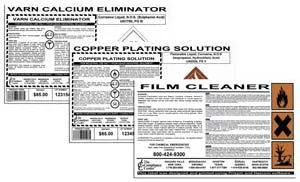
The Five Core Pillars of the IMDG Code
1. Classification
Assigning dangerous goods to one of 9 hazard classes and determining appropriate Packing Groups (I, II, III) based on flashpoint, toxicity, and reactivity.
2. Packaging & Tanks
Mandating certified UN specification packaging, IBCs, and portable tanks that have passed standardized drop, stacking, and hydrostatic pressure tests.
3. Marking & Labelling
Ensuring packages carry the UN Number, Proper Shipping Name, primary and secondary diamond hazard placards that survive 3 months seawater immersion.
4. Documentation
Requiring the Multimodal Dangerous Goods Form (MDGF), signed Container Packing Certificate (CPC), and Dangerous Goods Manifest (DGM) before vessel departure.
5. Segregation
Enforcing physical separation distances on deck and inside cargo holds to prevent explosive, toxic, or exothermic reactions between incompatible chemicals.
3. The 9 Dangerous Goods Classes, Packing Groups & Placarding
Comprehensive Review of the 9 IMDG Classes
Classification under the IMDG Code is based on the inherent physical, chemical, and biological hazards posed during sea transit. Dangerous goods are divided into nine classes, several of which are subdivided into specialized divisions reflecting precise reaction dynamics.
Packing Group Criteria & Engineering Test Rigor
| Packing Group | Degree of Danger | Drop Test Height | Hydrostatic Leak Test | Exempted IMDG Classes |
|---|---|---|---|---|
| Packing Group I (X) | Great Danger (e.g. Sodium cyanide, Nitroglycerin solution, high toxic corrosives). | 1.8 metres onto rigid steel plate. | 250 kPa minimum (held for 5 minutes without weeping). | The Packing Group concept does not apply to: • Class 1 (Explosives) • Class 2 (Gases) • Class 5.2 (Organic Peroxides) • Class 6.2 (Infectious Substances) • Class 7 (Radioactive Materials) |
| Packing Group II (Y) | Medium Danger (e.g. Petrol, Kerosene, Nitric acid, Hydrochloric acid). | 1.2 metres onto rigid steel plate. | 100 kPa minimum. | |
| Packing Group III (Z) | Minor Danger (e.g. Diesel fuel, Gas oil, Phosphoric acid solutions). | 0.8 metres onto rigid steel plate. | 100 kPa minimum. |
Class 5.2 Organic Peroxides are thermally unstable and undergo self-accelerating exothermic decomposition. If ambient hold temperature exceeds the Control Temperature, emergency refrigeration procedures must be initiated. If the cargo reaches its Emergency Temperature (typically 5°C to 10°C below its SADT), explosive decomposition, vessel fire, or toxic gas blowout is imminent. Jettisoning procedures under the Master's authority must be prepared.
4. Container Segregation Geometry, EmS Response & PSC Detention
Container Ship Cell Guide Segregation Geometry
On modern cellular container vessels, segregation is not determined by simple visual distance but by a mathematically defined Bay-Row-Tier slot coordinate matrix under IMDG Chapter 7.2. Incompatible dangerous goods must be separated by specific container spaces or fire-resistant, gas-tight steel bulkheads (A-60 insulation class).
IMDG Chapter 7.2 Four-Tier Segregation Hierarchy
| Segregation Term | Code | Distance / Boundary Requirement (Packaged) | Container Vessel Cell Separation |
|---|---|---|---|
| "Away from" | 1 | Effectively segregated so that incompatible materials cannot react dangerously; min 3 metres separation. | One container space horizontally (either forward/aft or athwartships) on deck; or separate vertical rows under deck. |
| "Separated from" | 2 | Stowed in different compartments or holds, or separated by a min distance of 6 metres horizontally on deck. | At least two container slots athwartships or forward/aft on deck; or separated by a fire-resistant A-60 bulkhead under deck. |
| "Separated by a complete compartment or hold from" | 3 | Either a vertical or longitudinal separation by an intervening complete cargo hold or deck space. | Not permitted in the same cargo hold; must be separated by an intervening cargo hold or weather deck gap. |
| "Separated longitudinally by an intervening complete compartment or hold from" | 4 | Longitudinal separation only; intervening hold must be free of incompatible dangerous materials. | Minimum one full container bay length (40-foot bay) intervening with separate hatch covers and bulkheads. |