Scavenging, Turbocharging & Surge
How a cylinder breathes in a quarter of the time, why pulse and constant pressure split the fleet, and what surging sounds like.
Key Principles at a Glance 5 points
- Two-strokes get a quarter of four-stroke time for gas exchange — scavenging must finish around BDC with barely any piston movement.
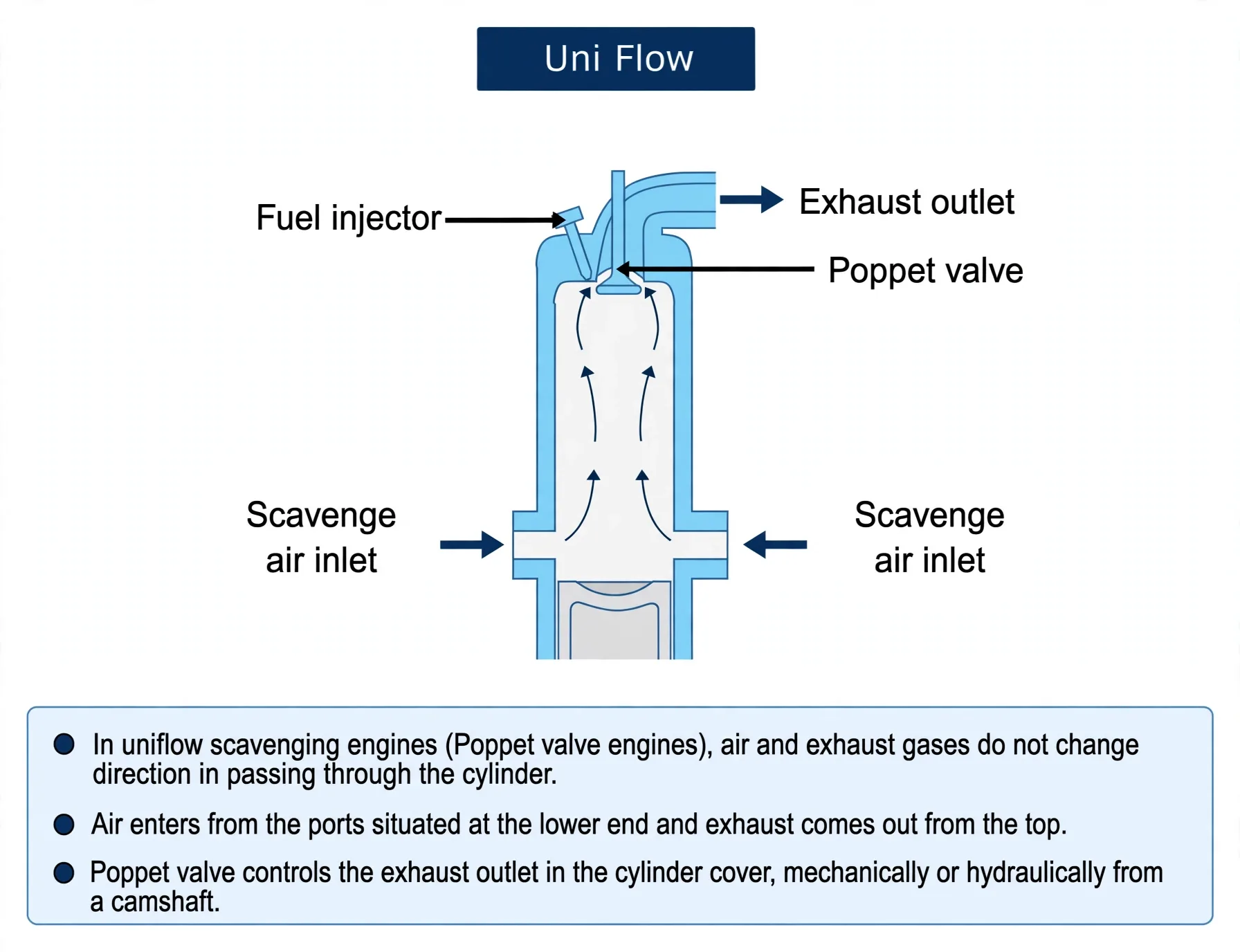
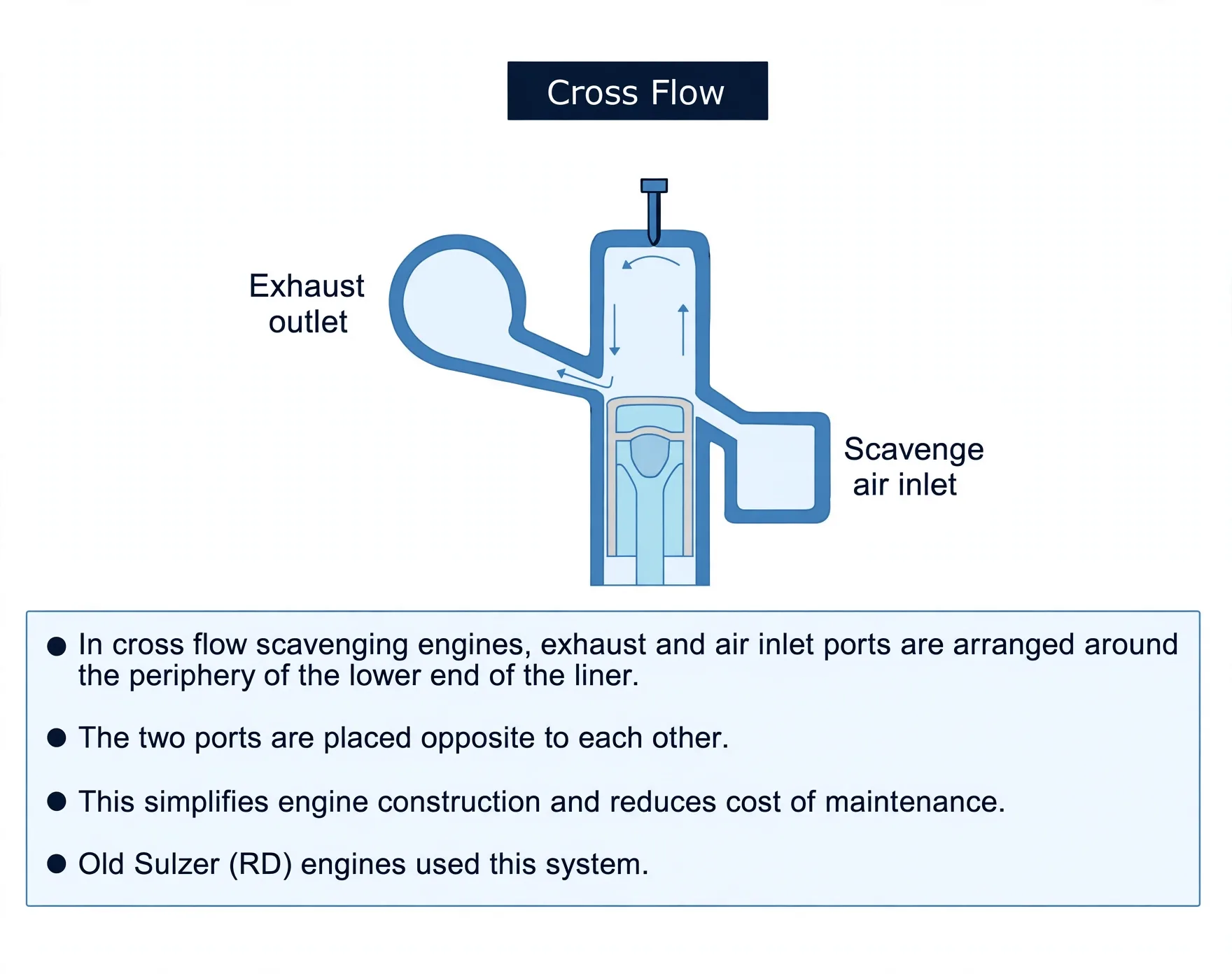
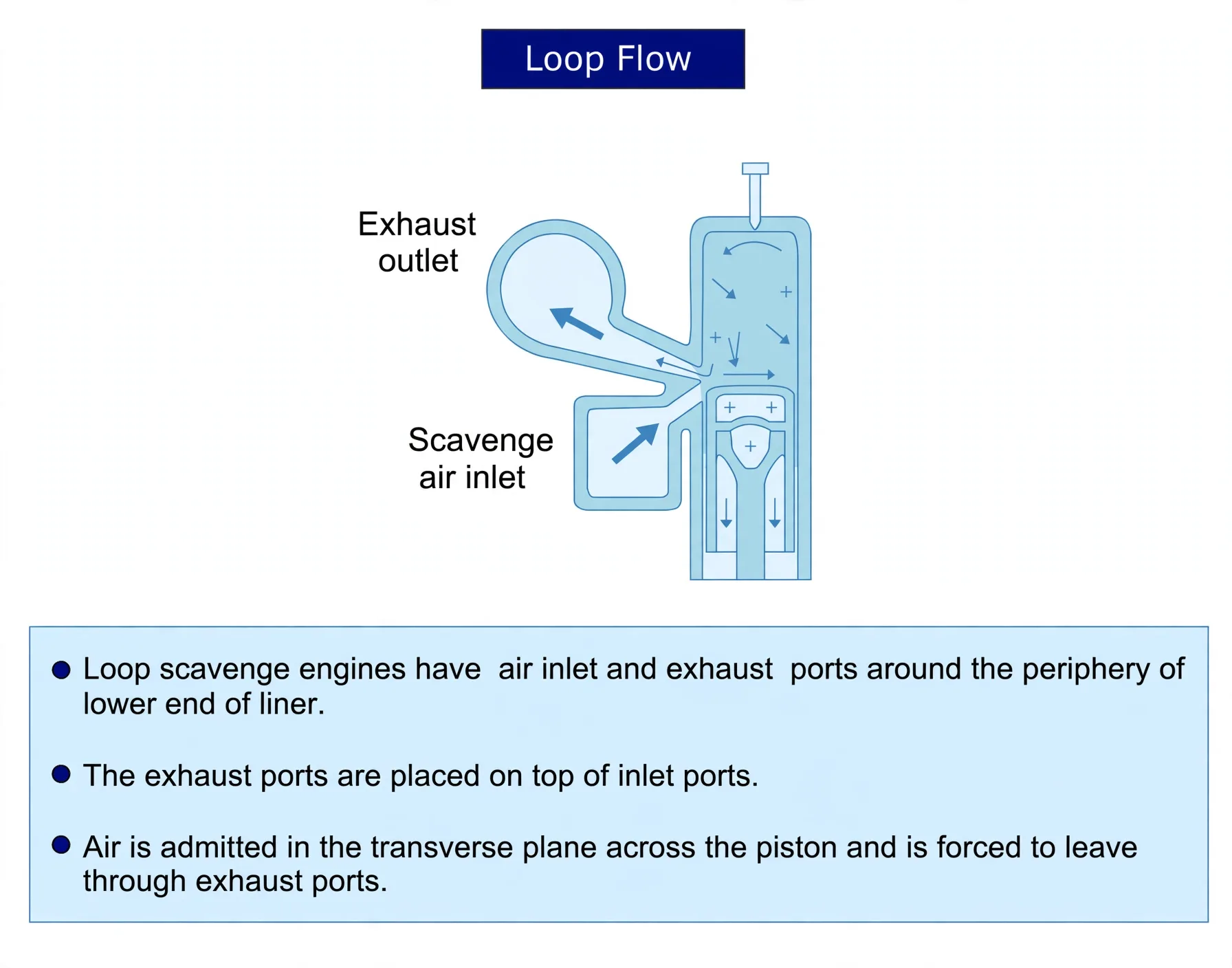
- Uniflow sweeps straight through (ports below, valve above); loop folds the flow back; cross fires it straight across — efficiency rises in that order.
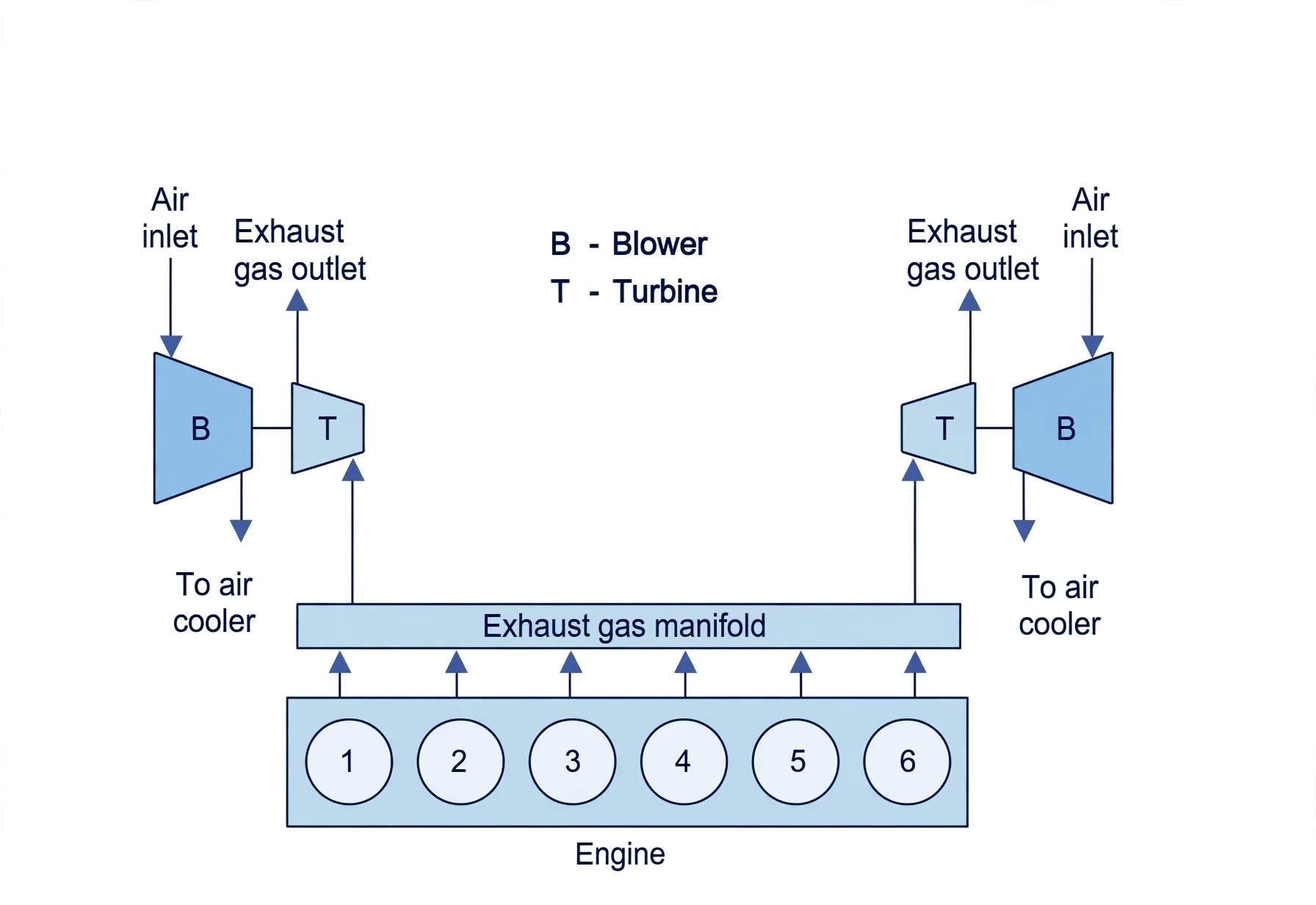
- Pulse harvests blow-down kinetic energy per grouped cylinders (sharp at low load); constant pressure harvests heat from one manifold (smooth at high load).
- Surge is flow reversal when delivery resistance beats blower pressure — howling, thudding, pressure swinging; ease load, clean the path, wash the wheels.
- Washing is scheduled chemistry: turbine wet (short or ten-minute) or dry granules, blower freshwater at full revs — fouled wheels burn more fuel for less air.
1. Three Ways to Sweep a Cylinder
With no dedicated strokes, burnt gas must leave and fresh charge must arrive in one BDC window. Geometry decides how completely:
2. Pulse vs Constant Pressure
Supercharging compresses charge with exhaust-driven turbine power, intercooled before admission. Two exhaust architectures feed the turbine:
| Pulse | Constant pressure | |
|---|---|---|
| Exhaust routing | Grouped pipes by firing order, no cross-talk | One common manifold, one or two wheels |
| Energy used | Blow-down kinetic pulses | Steady heat content |
| Wins at | Low load, response, acceleration, scavenging unaided | High load efficiency, smoothness, fuel rate, simple piping, flexible siting |
| Costs | Rough inefficient turbine at ratings, complex piping | Needs scavenge help and aux blowers at low load, dull response |
3. Surge — When Flow Fights Back
Choke the delivery path and blower pressure climbs while flow falls — past the limit point the air reverses, resistance drops, flow resumes, resistance rebuilds: periodic breakdown with howling, thudding, suck-blow at the intake, swinging scavenge pressure and hunting revs. Fouling anywhere (filter, cooler, ports, manifolds, economiser, turbine, nozzle ring), injection faults, power imbalance, sudden load swings and mismatched wheels all push toward the line; the dotted inoperable zone on every blower curve marks it.
Remedy order: match wheel to engine, ease speed and manifold pressure off the line, clean the dirty side, and wash wheels on schedule — because sustained surge breaks blades.
4. Washing Wheels Clean
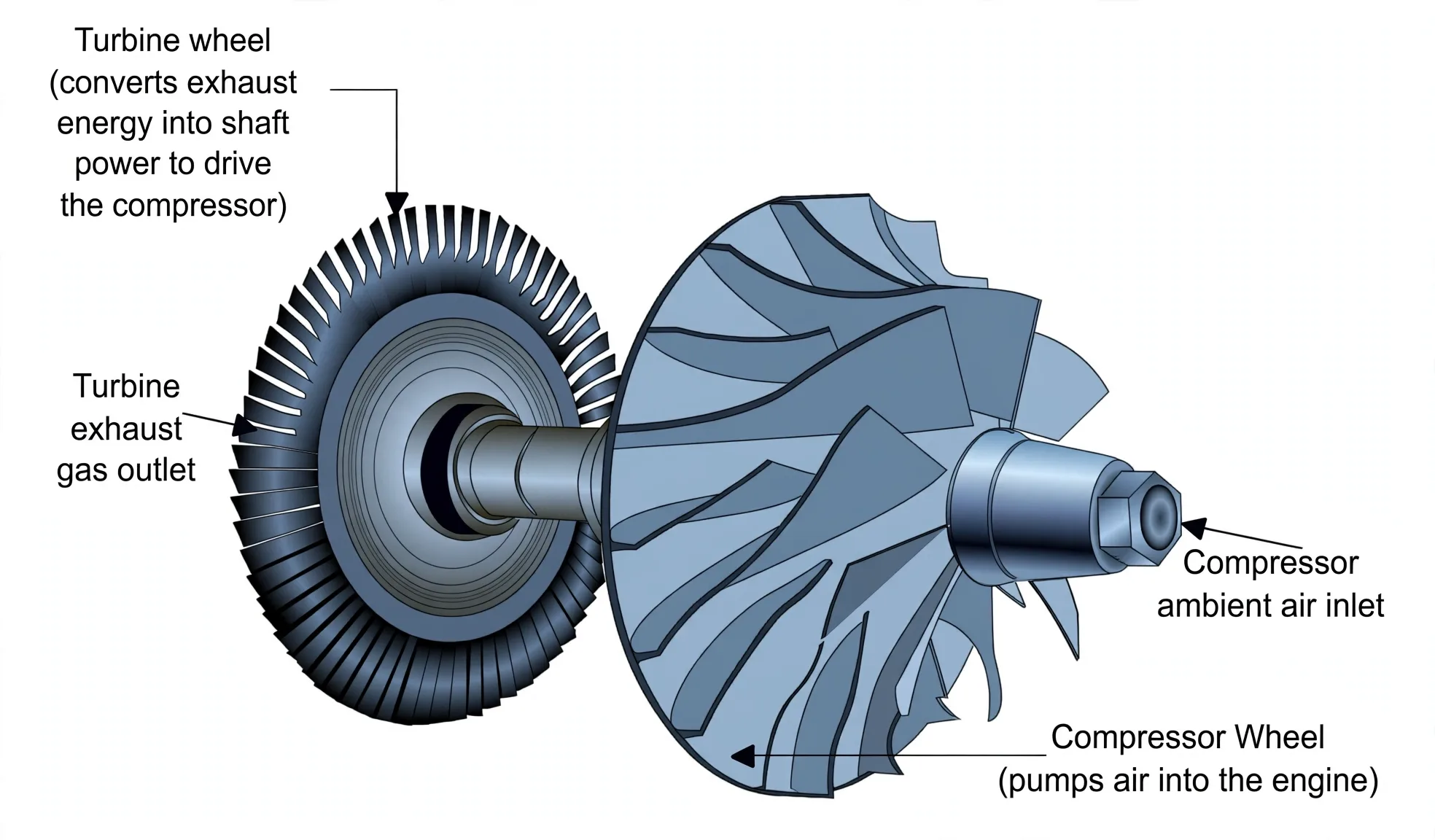
HFO exhaust fouls turbine wheels (back pressure, surge, heat, fuel burn) and starves blowers into black smoke. Turbine wet wash runs at reduced load under exhaust-temperature limits with slightly hot freshwater: 30-second shots on any casing, ten-minute soaks where gasketed casings allow (idling gives best results, minor weep acceptable, 20-minute dry run after with drains watched). Dry wash fires carbon granules on air with no slowdown and no thermal risk. Blower wash runs full-rpm freshwater through a container rig, air pressure doing the scrubbing.